Care & Troubleshooting
Too Much Condensation in a Terrarium? What to Do
Foggy glass is part of a closed terrarium's water cycle, but constant heavy droplets can signal excess moisture. Learn how to tell normal condensation from a problem and correct it without overreacting.
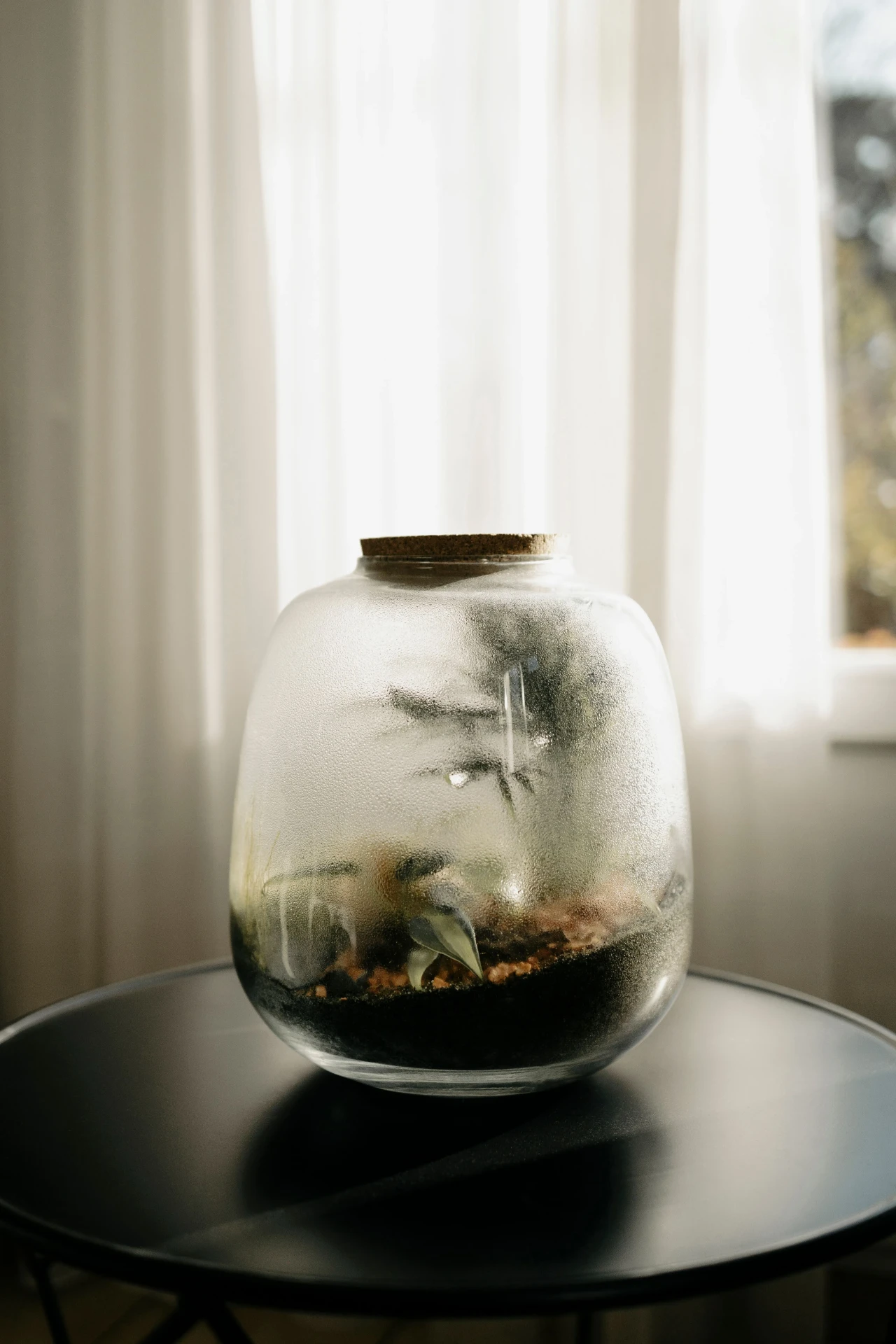
Condensation inside a closed terrarium is not automatically a problem. It is part of the small water cycle that makes a sealed enclosure possible.
The useful question is not whether droplets exist. It is whether the glass, substrate and plants together suggest a balanced system or an enclosure carrying more water than it can comfortably use.
Why condensation forms in a closed terrarium
Water evaporates from the substrate and moves through plants by transpiration. When humid air meets cooler glass, some water vapor returns to liquid droplets.
Those droplets may later run back into the growing medium. That is part of the internal recycling process rather than evidence that something has automatically gone wrong.
Temperature changes how the glass looks
A terrarium can look clearer or foggier at different times without any water being added or removed. Condensation depends partly on the temperature difference between humid air inside the enclosure and the glass surface.
That is why one photograph or one hour of fogging cannot provide a universal humidity diagnosis.
Normal condensation vs. too much condensation
| What you see | Other evidence | Likely response |
|---|---|---|
| Light fog or scattered droplets that change over time | Healthy plants; moist but not saturated substrate | Usually leave it alone |
| Heavy fog for long periods | Substrate still balanced and plants healthy | Monitor before changing anything |
| Heavy droplets / constant fog | Saturated substrate or pooling water | Reduce excess moisture |
| Fog plus soft or declining plants | Root-zone stress or decay possible | Investigate the whole system |
Read three things together
- Glass: light and changing, or heavily fogged for long periods?
- Substrate: moist, or visibly saturated and waterlogged?
- Plants: healthy and firm, or yellowing, soft, collapsing or rotting?
No one perfect condensation amount applies to every jar. These three signals are more useful together than an arbitrary percentage or timer.
What to do when excess moisture is clear
First, stop adding water. If the substrate is already saturated, more misting only increases the correction you will eventually need to make.
Temporarily open the lid so some moisture can escape. Then reseal and reassess rather than converting the terrarium permanently into an open container.
How long should you leave it open?
There is no universal ventilation timer. The amount of excess moisture, container size, room conditions and substrate all differ.
Use the result as the endpoint: the goal is to move away from obvious saturation while keeping the plants and moss appropriately moist.
Should you wipe condensation off the glass?
You can. Wiping removes a small amount of water and makes it easier to inspect the terrarium. It is useful when droplets are excessive.
Wiping the glass is not a substitute for correcting a saturated root zone. If the substrate contains too much water, the glass can fog again.
What if there is substantial standing water?
If a lower reservoir is badly overfilled or the substrate is saturated from below, direct removal may be more effective than waiting for all of the excess to evaporate.
A pipette, syringe, narrow tube or absorbent material can remove reachable standing water without automatically dismantling the terrarium.
Why is only one side of the terrarium foggy?
One-sided condensation can reflect a temperature gradient. Glass nearer a cool window, wall or air current may reach condensation conditions before the warmer side.
That pattern alone does not prove the substrate is overwatered.
Do not use direct sun to dry a wet terrarium
New terrariums often fog more during calibration
A newly planted terrarium contains moisture from substrate, nursery root balls, moss and hardscape. The first days and weeks are therefore a period of adjustment.
Temporary heavier condensation is more informative when paired with standing water, saturated substrate or deteriorating plants than when judged on appearance alone.
Does excess condensation cause mold?
Excess moisture can contribute to conditions that favor fungal growth, particularly when dead organic material is present. But condensation itself is not a mold diagnosis.
If visible fungal growth appears, inspect what is actually molding and use the dedicated mold troubleshooting process rather than treating foggy glass as the entire cause.
What if there is no condensation?
Do not automatically add water. A clear terrarium may simply be at a temperature where condensation is not forming on the glass.
Use the substrate and plant condition alongside the glass before deciding whether the enclosure is genuinely becoming dry.
After correcting excess moisture
Reseal the terrarium and watch the direction of change. You are looking for a more manageable moisture pattern, stable plants and a root zone that is moist rather than saturated.
Do not try to eliminate the miniature water cycle. The goal is balance, not permanently dry glass.
Frequently asked questions
- Is condensation normal in a closed terrarium?
- Yes. Condensation is part of the closed water cycle. Interpret its amount alongside substrate moisture and plant health.
- How much condensation should a terrarium have?
- There is no universal target. Light or changing condensation with healthy plants and moist-but-not-saturated substrate is usually less concerning than persistent heavy droplets combined with saturation or decline.
- How do I reduce condensation in a terrarium?
- Stop adding water and temporarily open the lid so some moisture can escape. Remove substantial standing water directly if necessary, then reseal and monitor.
- How long should I leave my terrarium open to reduce condensation?
- Use the condition of the system rather than a universal timer. Close it again once obvious excess moisture has reduced while the plants and substrate remain appropriately moist.
- Should I wipe condensation off my terrarium?
- You can wipe excessive droplets from the glass. It removes a small amount of water and improves visibility, but it will not correct a saturated root zone by itself.
- Why is only one side of my terrarium foggy?
- A temperature difference across the glass can create one-sided condensation. That pattern alone does not prove overwatering.
- Does condensation mean my terrarium is too humid?
- Not by itself. Condensation reflects moisture plus temperature conditions at the glass. Check substrate moisture and plant condition too.
- Can too much condensation cause mold?
- Excess moisture can contribute to conditions that favor fungal growth, especially around decaying material, but visible mold needs its own diagnosis.
- Should I put a foggy terrarium in sunlight to dry it out?
- No. Strong direct sunlight can overheat a closed glass container. Reduce excess moisture through controlled ventilation instead.
- Why does condensation return after opening the lid?
- If plenty of moisture remains inside, the water cycle can resume after resealing. Repeated fogging is more concerning when the root zone remains saturated or plants are declining.
Related guides

Care & Troubleshooting
How Often Should You Water a Closed Terrarium?
A balanced closed terrarium may go months without added water. Learn how to read the glass, substrate, and plants so you water only when the system actually needs it.
11 min readpublished
Care & Troubleshooting
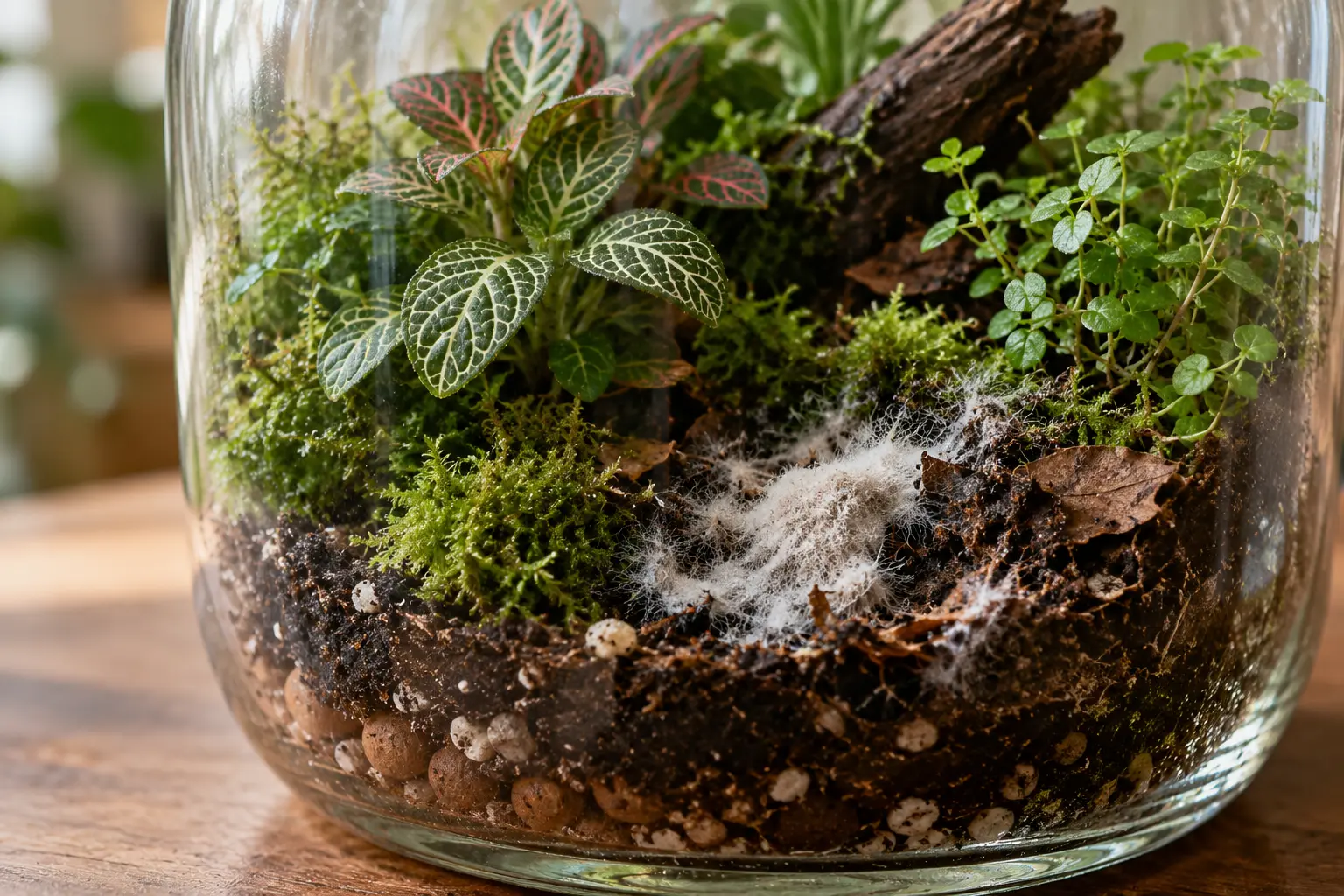
Mold in a Terrarium: Normal or a Problem?
Found fuzzy growth inside the glass? Learn when terrarium mold is simply decomposing organic material, when it signals excess moisture, and what to do next.
11 min readpublished
Terrarium Basics
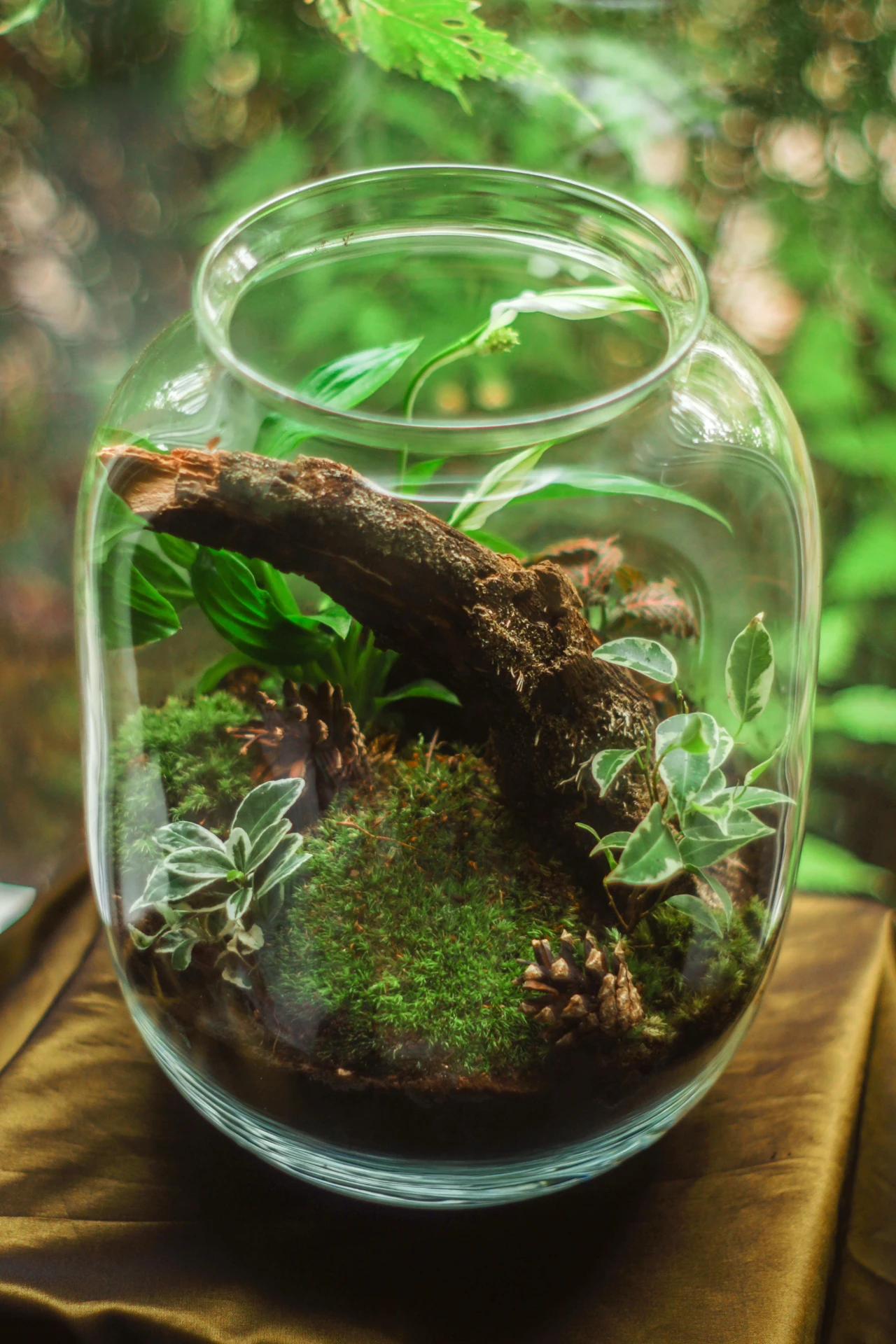
How to Make a Closed Terrarium: Beginner's Complete Guide
A full walkthrough of building your first sealed terrarium, from container choice to the first weeks of settling in.
14 min readpublished
Build Your First Terrarium With Confidence
Get the free Closed Terrarium Quick-Start Checklist.
Newsletter coming soon