Care & Troubleshooting
Why Is My Terrarium Dying? Complete Troubleshooting Guide
Several problems at once? Diagnose your terrarium as a system by checking roots, moisture, light, decay and plant compatibility before deciding whether to rescue or rebuild it.
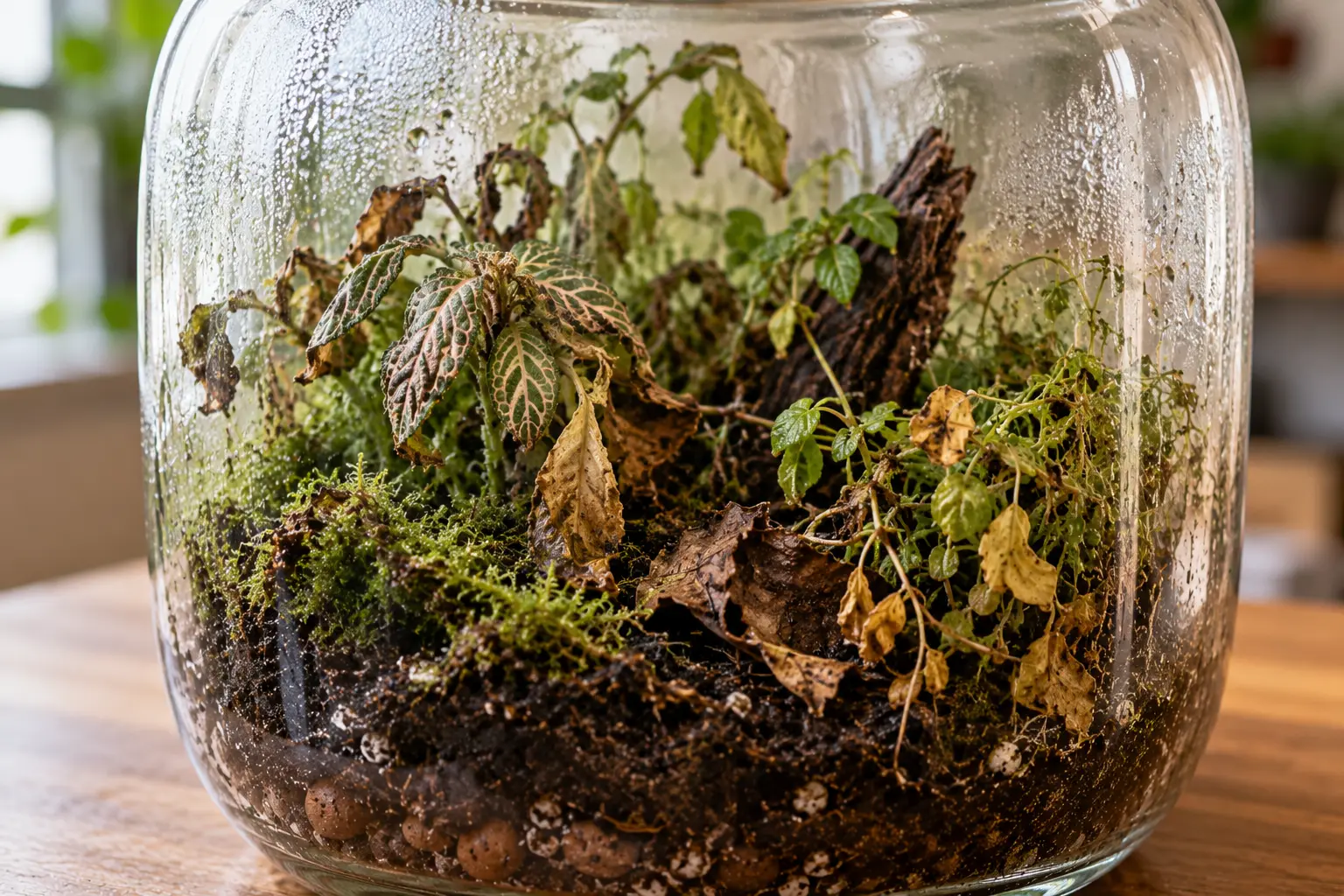
A terrarium rarely fails in a tidy way. One leaf turns yellow, the glass fogs, a patch of mold appears and another plant wilts. By the time you start troubleshooting, several problems may appear to have arrived at once.
That is exactly when random fixes become dangerous. Adding water, opening the lid, fertilizing, moving the jar and pruning half the plants on the same afternoon changes too many variables at once.
Diagnose the system first. Then make the smallest correction the evidence supports.
Start with one question: one plant or everything?
If one plant is declining while neighboring plants look healthy, investigate that individual plant first: species compatibility, roots, stem, crowding, leaves touching wet glass, physical damage and pests.
If several unrelated plants are declining together, suspect a shared condition first: excess water, severe dryness, unsuitable light, overheating, root-zone trouble, widespread decay or an unsuitable growing environment.
The Terrarium Rescue Order
1. Scope: one plant or many?
A localized failure and an ecosystem-wide failure should not trigger the same response. Do not dismantle an otherwise healthy terrarium because one species was a poor fit.
2. Check the root zone before the leaves
Look through the container at substrate moisture, standing water, lower layers, visible roots and stem bases.
| Root-zone state | What it may look like |
|---|---|
| Saturated | Growing medium continually soaked, pooling water, soft plant bases |
| Balanced | Moist growing medium without obvious flooding |
| Drying | Substrate significantly drier; moss or moisture-loving plants losing firmness |
Above-ground symptoms can overlap. Even wilting can occur with excessively wet or excessively dry roots, which is why inspection should come before automatic watering.
If the terrarium is too wet
Stop adding water. Persistent standing water, saturated substrate, soft tissue and widespread yellowing raise concern that the root environment is carrying too much moisture.
Temporary ventilation may help remove excess moisture, while severe standing water may need direct removal. Do not use direct sun as a drying treatment.
If the terrarium is genuinely too dry
Look for several clues together: a root zone that is truly drying, prolonged lack of condensation through ordinary cycles and moisture-loving plants showing credible drought stress.
Add a small amount of water, then wait. A rescue attempt does not require flooding the enclosure.
3. Check the environment
Closed terrariums generally belong in bright indirect light rather than strong direct sun. Direct sunlight can heat enclosed glass quickly and damage plants.
Too little light can also weaken growth. Consider whether the terrarium has recently moved, whether seasonal light has changed or whether it is sitting near a heat source or cold draft.
4. Find active decay
Look for collapsing stems, rotten roots, dead leaves, decaying moss, badly decomposing wood, spreading fungal growth or other material that is actively breaking down.
Remove obviously dead or collapsing material rather than asking charcoal, springtails or another product to hide the underlying problem.
5. Check plant compatibility
A sealed humid terrarium suits compact tropical foliage plants, ferns and mosses much better than plants adapted to dry conditions.
Cacti and most succulents are a classic mismatch. One incompatible species can decline while the remainder of the terrarium is perfectly workable.
6. What changed before the decline?
Recent watering, relocation, direct sunlight, a new plant, fertilizer, pruning, repotting or a newly sealed lid can provide useful diagnostic context.
Timing does not prove a cause, but it can help identify which variable deserves inspection first.
Change one major thing at a time
Once the strongest problem is identified, correct it and observe the result. Changing many conditions at once makes it harder to know which action helped and increases the chance of causing a second problem.
Should you rescue or rebuild the terrarium?
| Rescue in place | Consider a larger rebuild |
|---|---|
| Most plants remain viable | Widespread root failure |
| Damage is localized | Multiple unrelated plants collapsing |
| Moisture can be corrected | Substrate badly degraded or persistently saturated |
| Substrate still functions | Underlying environment cannot be corrected in place |
| One incompatible plant can be removed | Planting design itself is fundamentally incompatible |
One ugly leaf is not a rebuild. Rebuilding is an escalation step for problems the existing root zone or planting cannot reasonably recover from.
A partial rebuild is often enough
You may be able to remove one failed plant, replace a damaged patch of substrate or correct an overfilled section without stripping every healthy component from the container.
What recovery looks like
- Deterioration stops spreading
- New growth looks healthy
- Stems remain firm
- Condensation becomes more manageable
- Standing water decreases
- Mold stops expanding
- Surviving plants remain stable
A damaged leaf may never become green again. Judge recovery by what happens next rather than expecting old damage to reverse.
What not to do to a dying terrarium
- Do not automatically flood it
- Do not dry it completely
- Do not put it in direct sun
- Do not automatically fertilize it
- Do not spray fungicide without diagnosis
- Do not spray pesticide without identifying a pest
- Do not add charcoal as a universal cure
- Do not add springtails as a universal cure
- Do not rebuild everything before diagnosing the failure
Quick diagnostic table
| What you see | First thing to inspect | Best next topic |
|---|---|---|
| Several yellow plants + wet substrate | Root-zone moisture | Watering |
| Heavy persistent fog | Overall moisture | Condensation |
| Visible mold | Location, spread and decay | Mold |
| Brown / yellow leaves | Moisture + tissue pattern | Leaf diagnosis |
| One plant dying, others healthy | Compatibility / local roots | Plant selection |
| Several plants wilting | Root zone first | Watering / system diagnosis |
| Scorched or bleached growth | Light and heat | Lighting |
| Pale stretched growth | Light level | Lighting |
| Succulent rotting in sealed jar | Plant compatibility | Plant selection |
| Major system collapse | Roots + substrate + environment | Rescue / rebuild |
Frequently asked questions
- Can a dying terrarium be saved?
- Often, yes. If most plants remain viable and the underlying problem is correctable moisture, placement, dead material or one incompatible plant, a full rebuild may not be necessary.
- What is the most common reason terrarium plants die?
- Excess moisture is an important problem in closed terrariums, but it is not the only cause. Light, heat, dryness, incompatible plants, root problems, decay and pests can also contribute.
- How do I know if my terrarium is overwatered?
- Look for several clues together: saturated substrate, substantial standing water, persistent heavy condensation, yellowing foliage, soft stems or unhealthy roots.
- Why is my terrarium dying even though it has water?
- Plants need functioning roots as well as water. Roots kept excessively wet can become unhealthy, so a plant may wilt or decline even while surrounded by moisture.
- Should I leave a dying terrarium open?
- Only when excess moisture is part of the diagnosis. Temporary ventilation can help an overly wet closed terrarium, but leaving the lid off permanently creates a different environment.
- Should I remove dying plants from my terrarium?
- Remove plants that are extensively rotten, collapsing, clearly unsuitable or likely to spread a diagnosed problem. One aging leaf does not automatically justify removing the whole plant.
- Should I fertilize a dying terrarium?
- Usually not as a first response. Check water, root health, light, compatibility and decay before treating the problem as nutrient deficiency.
- Why is one terrarium plant dying while the others are healthy?
- That plant may be incompatible with the enclosure, have localized root damage, be crowded, carry a pest or simply be failing independently. Investigate it before changing the whole system.
- Why are all my terrarium plants dying?
- When several unrelated plants decline together, investigate shared conditions first: root-zone moisture, light, heat, substrate condition, widespread decay and the overall planting design.
- When should I rebuild my terrarium?
- Consider rebuilding when root failure is widespread, the substrate is badly degraded, several unrelated plants are collapsing or the underlying growing environment cannot be corrected in place.
Related guides
Care & Troubleshooting
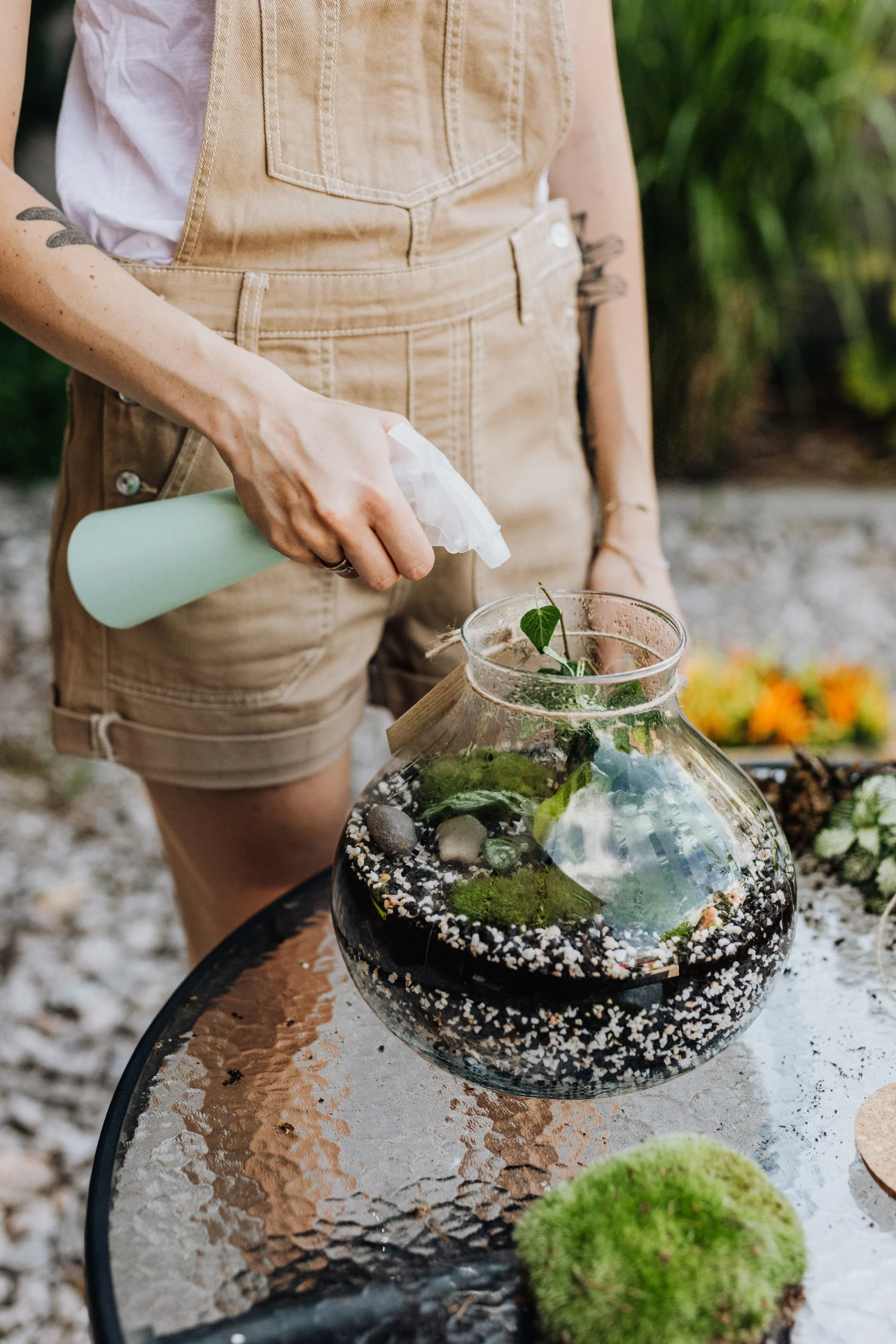
How Often Should You Water a Closed Terrarium?
A balanced closed terrarium may go months without added water. Learn how to read the glass, substrate, and plants so you water only when the system actually needs it.
11 min readpublished
Care & Troubleshooting
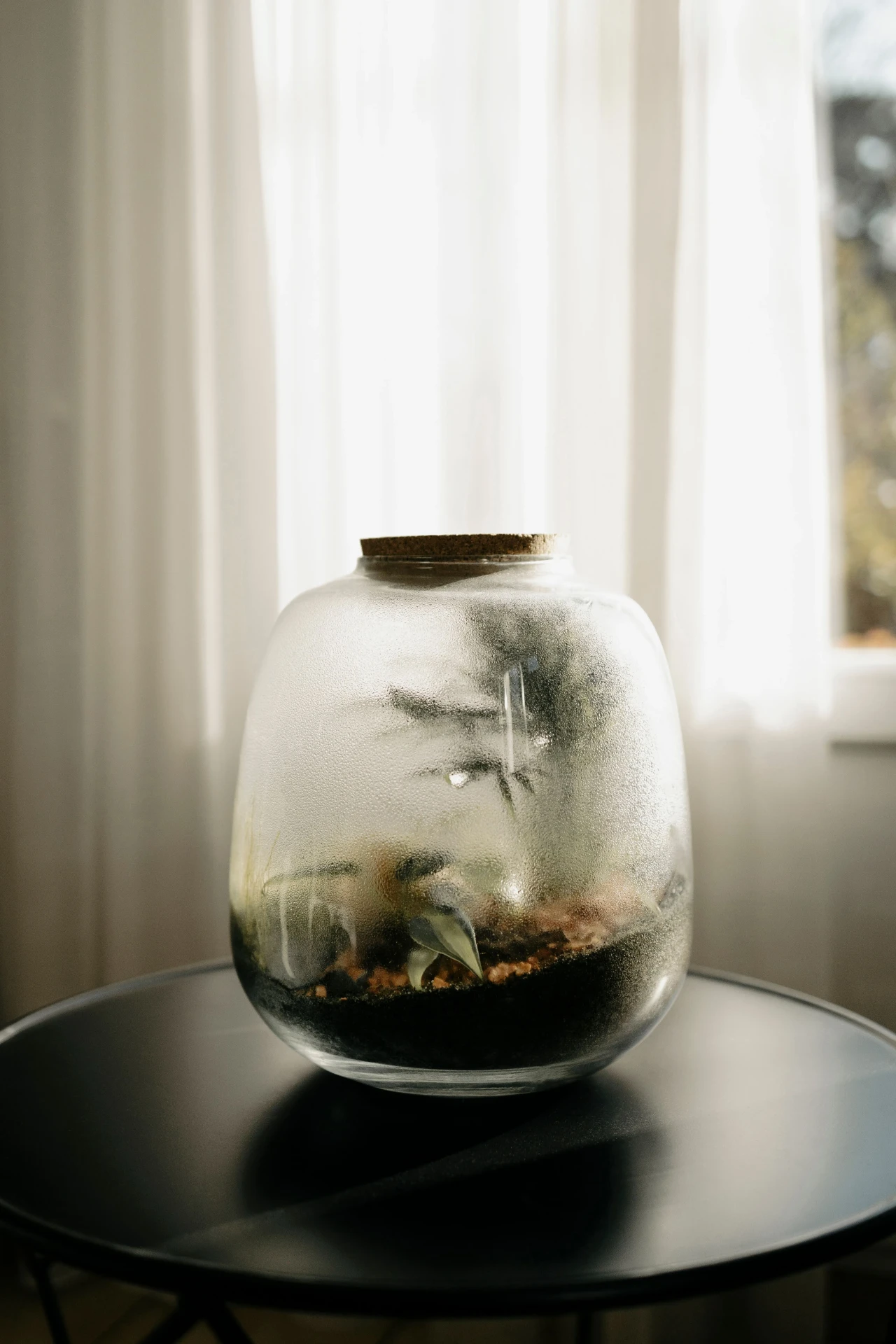
Too Much Condensation in a Terrarium? What to Do
Foggy glass is part of a closed terrarium's water cycle, but constant heavy droplets can signal excess moisture. Learn how to tell normal condensation from a problem and correct it without overreacting.
10 min readpublished
Care & Troubleshooting
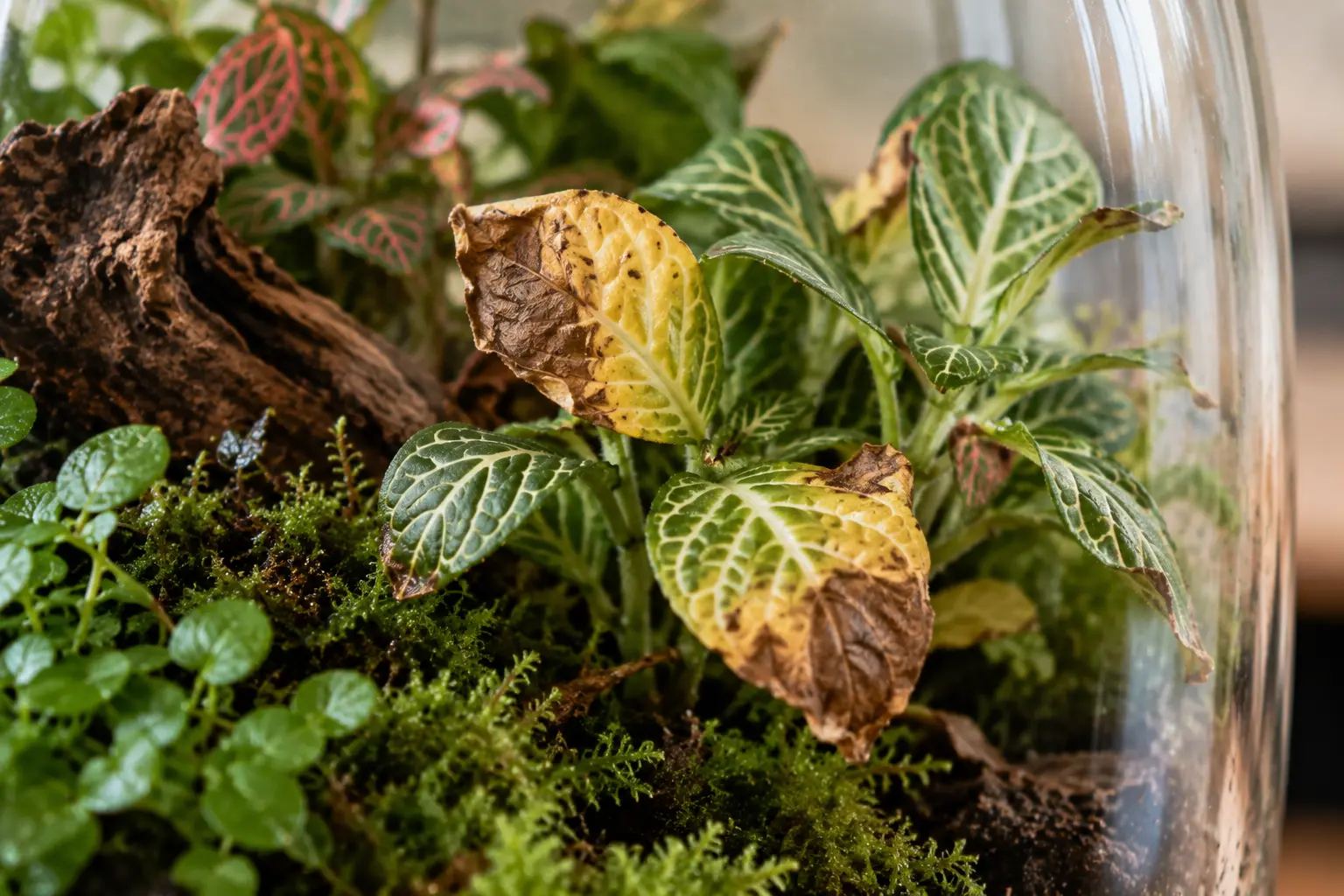
Why Are My Terrarium Plants Turning Brown or Yellow?
Yellow or brown leaves do not point to one automatic diagnosis. Use the location of the damage, substrate moisture, plant texture, light, and recent changes to find the most likely cause.
12 min readpublished
Build Your First Terrarium With Confidence
Get the free Closed Terrarium Quick-Start Checklist.
Newsletter coming soon