Care & Troubleshooting
Why Are My Terrarium Plants Turning Brown or Yellow?
Yellow or brown leaves do not point to one automatic diagnosis. Use the location of the damage, substrate moisture, plant texture, light, and recent changes to find the most likely cause.
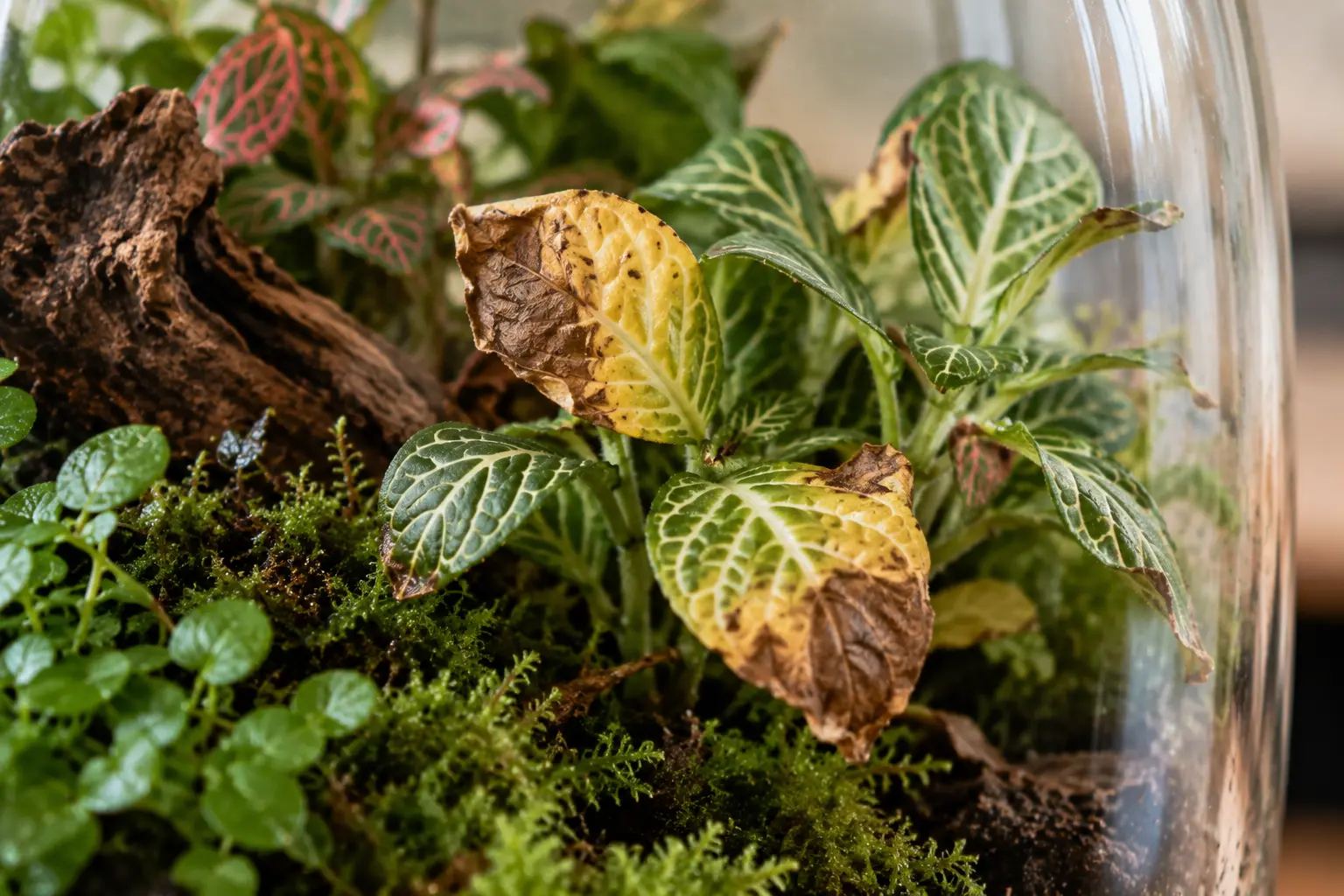
A yellow terrarium leaf does not automatically mean overwatering, and a brown leaf does not automatically mean underwatering.
Those associations can be useful clues, but leaf color by itself is too ambiguous for a reliable diagnosis. The useful question is what other evidence appears with the discoloration.
The Five-Clue Plant Check
| Clue | Question to ask |
|---|---|
| Location | Which leaves or plants are affected? |
| Moisture | Is the root zone saturated, balanced or genuinely dry? |
| Texture | Is damaged tissue crisp, soft, mushy or firm? |
| Environment | What are light, heat and condensation doing? |
| Timing | What changed before the symptoms appeared? |
Why terrarium leaves turn yellow
Yellowing commonly increases suspicion of excess moisture or root stress when it occurs alongside saturated substrate, standing water, soft growth or unhealthy roots.
But yellow leaves can also accompany natural aging, unsuitable light, temperature stress, nutrient problems or a plant that simply does not suit the enclosure.
A single old lower leaf turning yellow while the rest of the plant remains healthy is very different from several plants yellowing at once.
Why terrarium leaves turn brown
Brown, crisp tips or margins can support a dryness diagnosis when the substrate is genuinely drying and the plant has lost firmness.
Brown tissue can also result from excess fertilizer, heat, direct-light injury, physical damage, root problems or other stress. Texture and context matter.
Crisp brown and soft brown are not the same clue
Dry, crisp margins point in a different direction from a soft brown stem sitting in wet substrate. Tissue texture helps prevent the common mistake of adding water to a plant whose roots are already struggling in excess moisture.
Check the root zone before changing the terrarium
Look at the growing medium and any visible roots or stem bases. Is the substrate waterlogged, evenly moist or clearly drying? Is water standing in the lower portion of the container?
A healthy-looking top surface can hide a persistently saturated lower root zone, particularly in a jar with a deep substrate profile.
Do yellow leaves mean root rot?
Not automatically. Root rot is a diagnosis that needs supporting evidence such as unhealthy roots, soft tissue, persistent saturation or broader plant decline.
Do not label every yellow leaf as root rot and dismantle the terrarium without looking at the roots and moisture conditions first.
Check light and heat
Closed terrariums generally suit bright indirect light. Strong direct sun through glass can increase heat and contribute to bleached, scorched or damaged foliage.
Insufficient light can produce weak, pale or stretched new growth. Do not respond to pale plants by automatically adding water or fertilizer.
Fertilizer is rarely the first fix
Closed terrariums are small systems where restrained growth is usually desirable. Excess fertilizer can contribute to salt stress, brown tips and growth that quickly outgrows the container.
Investigate water, roots, light, plant compatibility and recent changes before treating discoloration as a fertilizer deficiency.
One plant declining vs. every plant declining
If one plant is struggling while its neighbors remain healthy, investigate that plant first: species suitability, local roots, crowding, damage or pests.
If several unrelated plants decline together, a shared environmental problem becomes more likely. Check saturated or dry substrate, excessive heat, unsuitable light, widespread decay and root-zone failure.
New terrarium plants can lose leaves after planting
A newly built terrarium is not yet an established system. Plants have been removed from nursery pots, handled, root-disturbed and moved into new substrate, humidity and light.
One or two older leaves declining while healthy new growth continues is more reassuring than discoloration that keeps spreading or affects several species.
Remove dead leaves, but do not prune every imperfect leaf
Remove fully dead leaves, rotting tissue, mushy material and fallen debris rather than allowing obvious decay to accumulate in a humid container.
A functional leaf with one small damaged edge does not automatically need removal. Monitor the direction of change.
Spots and pests need different evidence
Sharply defined lesions, fuzzy growth, water-soaked areas, insects, webbing, sticky residue or distorted new growth deserve a different diagnosis from general yellowing or browning.
Do not spray pesticides or fungicides into a closed terrarium without identifying what you are treating.
Quick diagnostic table
| What you see | Supporting clue | More likely direction |
|---|---|---|
| Yellow leaves | Saturated substrate | Excess moisture / root stress |
| Yellow + soft growth | Standing water | Waterlogging / decay |
| One old yellow leaf | Rest of plant healthy | Normal aging possible |
| Pale weak new growth | Plant stretching | Insufficient light possible |
| Pale / bleached areas | Strong direct light | Excess light / heat possible |
| Brown crisp margins | Genuinely dry substrate | Water stress possible |
| Brown tips | Recent fertilizer | Fertilizer / salt stress possible |
| Soft brown stem | Wet root zone | Rot / root problem |
| Wilt + dry substrate | Whole root zone dry | Underwatering more plausible |
Make the smallest correction supported by the evidence
Do not water, fertilize, vent, relocate and repot on the same day unless the situation genuinely requires emergency intervention.
Correct the strongest supported problem first, then watch what happens. That preserves information and reduces the chance of replacing one problem with another.
Frequently asked questions
- Why are my terrarium plants turning yellow?
- Yellow leaves can accompany excess moisture and root stress, but light, aging, temperature, plant compatibility and other causes are also possible. Check the root zone and surrounding evidence before acting.
- Why are my terrarium plants turning brown?
- Brown tissue can accompany dryness, excess fertilizer, heat, direct-light injury, root problems or normal damage. Texture and substrate condition help narrow the cause.
- Do yellow leaves always mean overwatering?
- No. Overwatering is one important possibility, especially with saturated substrate and soft growth, but leaf color alone is not a complete diagnosis.
- Do brown leaves always mean underwatering?
- No. Crisp brown margins plus genuinely dry substrate support that diagnosis, but brown tissue can have several other causes.
- Can terrarium plants wilt from too much water?
- Yes. Unhealthy roots in excessively wet conditions may be unable to support the plant properly, so wilting does not automatically prove that more water is needed.
- Should I remove yellow or brown leaves?
- Remove fully dead, rotten or collapsing material. A mostly healthy leaf with a small damaged edge can often be monitored instead.
- Can poor light cause yellow leaves in a terrarium?
- Unsuitable light can contribute to weak or pale growth. Strong direct light can also cause heat or scorch damage, so evaluate the whole light environment.
- Can fertilizer cause brown leaf tips?
- Excess fertilizer or salts can contribute to brown tips and margins. Fertilizer should not be a first-line terrarium rescue treatment.
- How do I know if terrarium roots are rotting?
- Look for supporting evidence such as persistently saturated substrate, unhealthy dark or soft roots, soft stems and continuing plant decline rather than diagnosing root rot from leaf color alone.
- What if only one plant is dying?
- Investigate that plant's compatibility, roots, crowding, damage and pests before changing the entire terrarium. Healthy neighboring plants argue against automatically treating the whole enclosure.
Related guides
Care & Troubleshooting
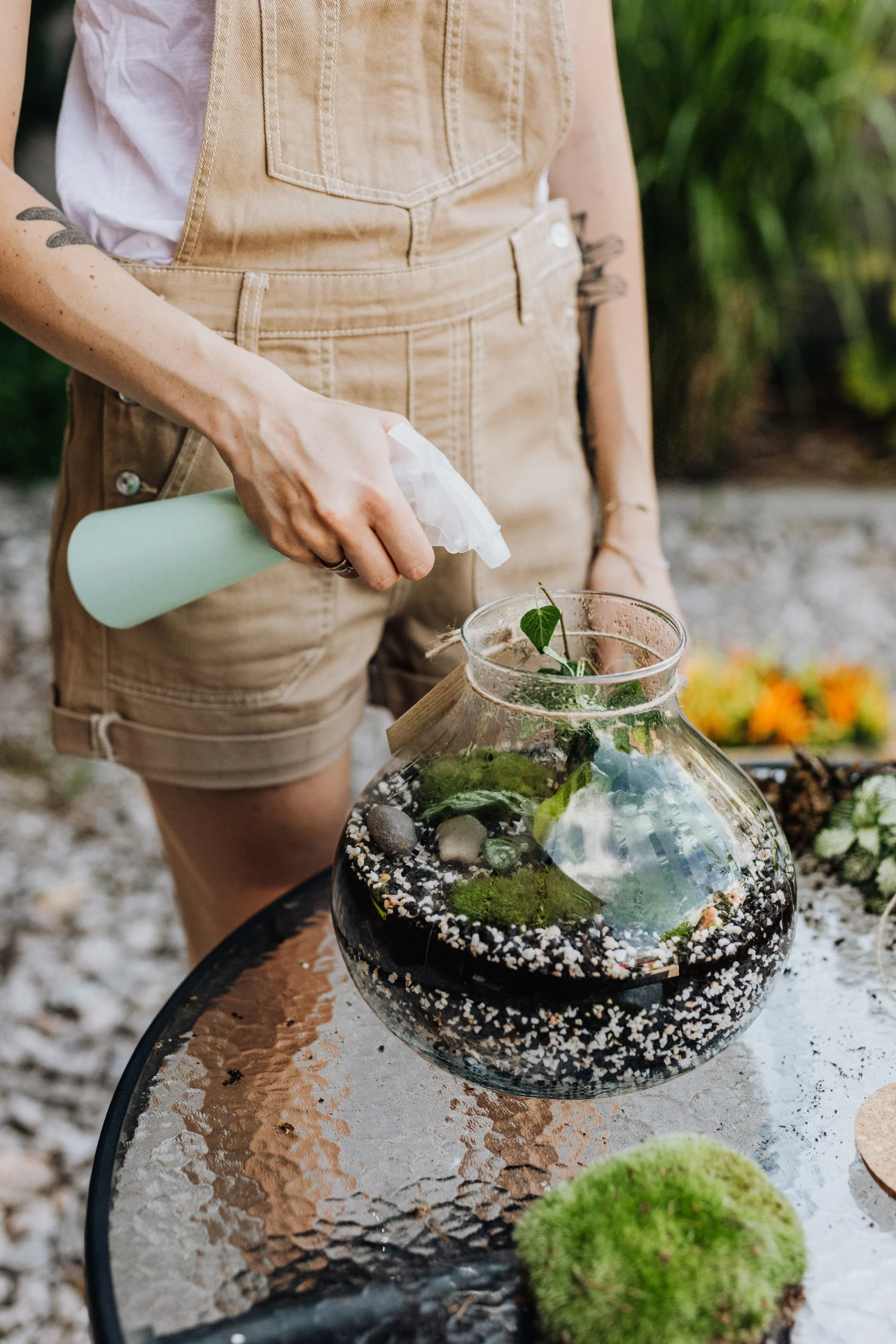
How Often Should You Water a Closed Terrarium?
A balanced closed terrarium may go months without added water. Learn how to read the glass, substrate, and plants so you water only when the system actually needs it.
11 min readpublished
Care & Troubleshooting
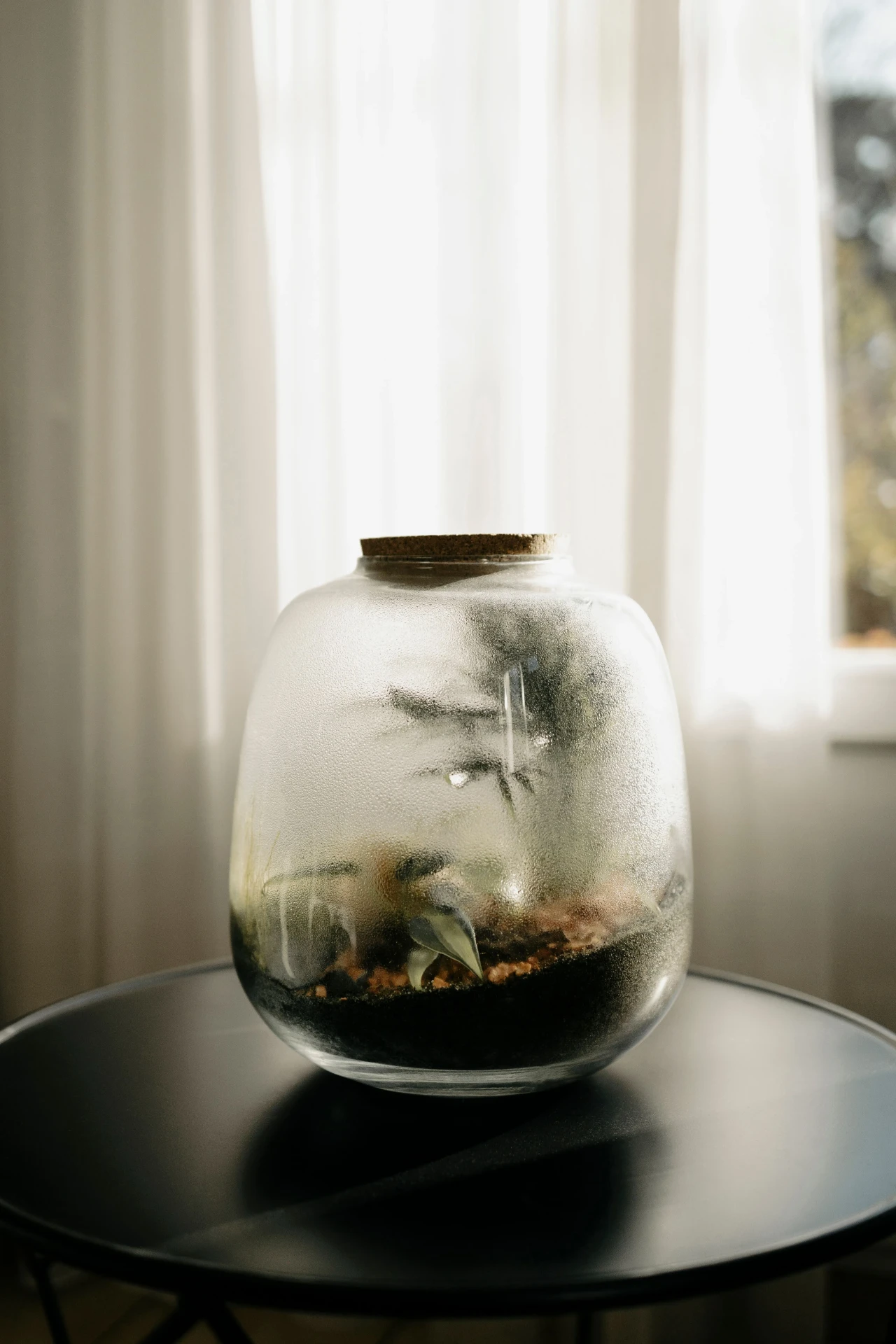
Too Much Condensation in a Terrarium? What to Do
Foggy glass is part of a closed terrarium's water cycle, but constant heavy droplets can signal excess moisture. Learn how to tell normal condensation from a problem and correct it without overreacting.
10 min readpublished
Care & Troubleshooting
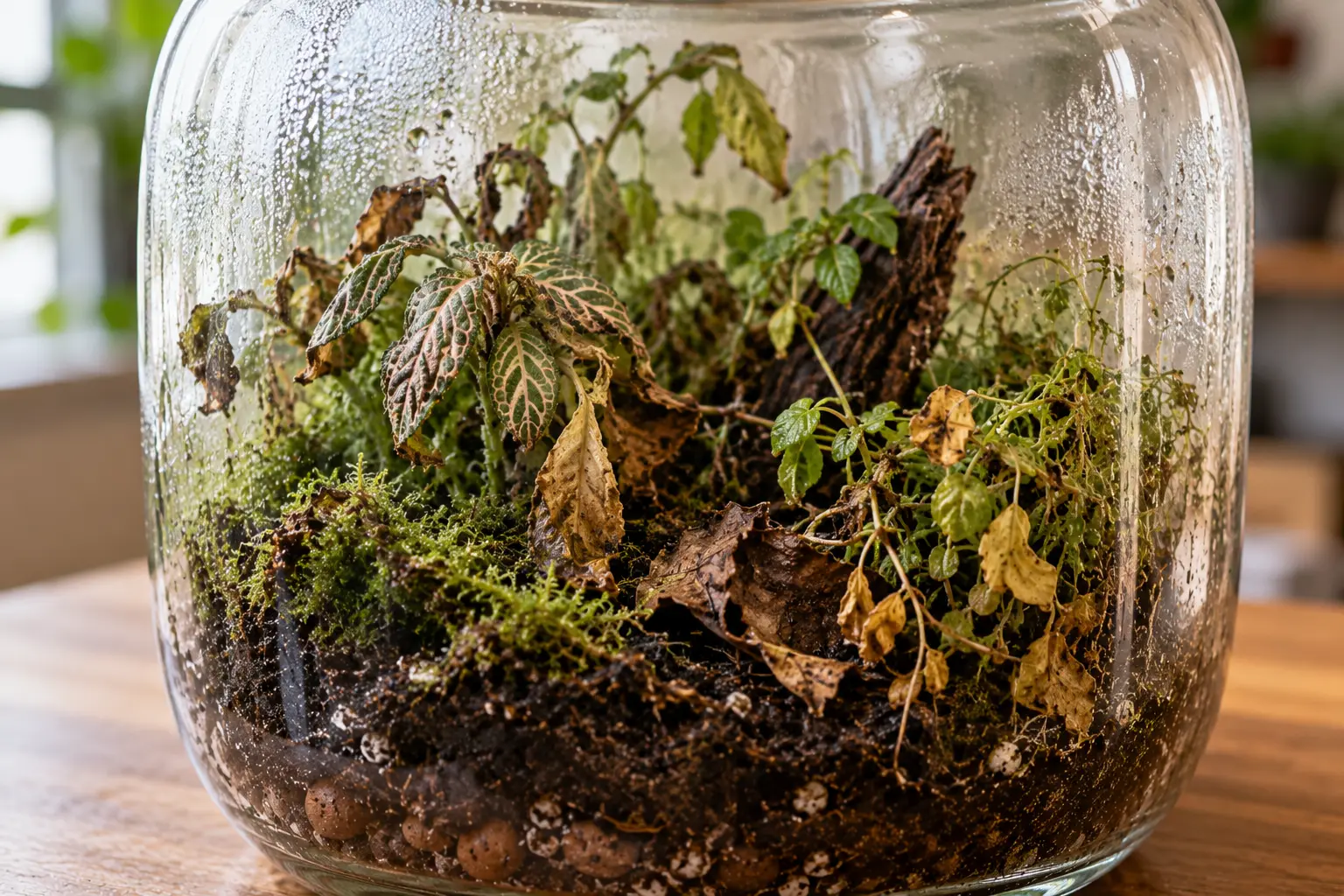
Why Is My Terrarium Dying? Complete Troubleshooting Guide
Several problems at once? Diagnose your terrarium as a system by checking roots, moisture, light, decay and plant compatibility before deciding whether to rescue or rebuild it.
14 min readpublished
Build Your First Terrarium With Confidence
Get the free Closed Terrarium Quick-Start Checklist.
Newsletter coming soon