Build & Substrate
Best Terrarium Substrate Mix for Closed Terrariums
Learn what a closed-terrarium substrate actually needs to do, a simple beginner recipe, how ABG-style mixes work, and which ingredients are optional.
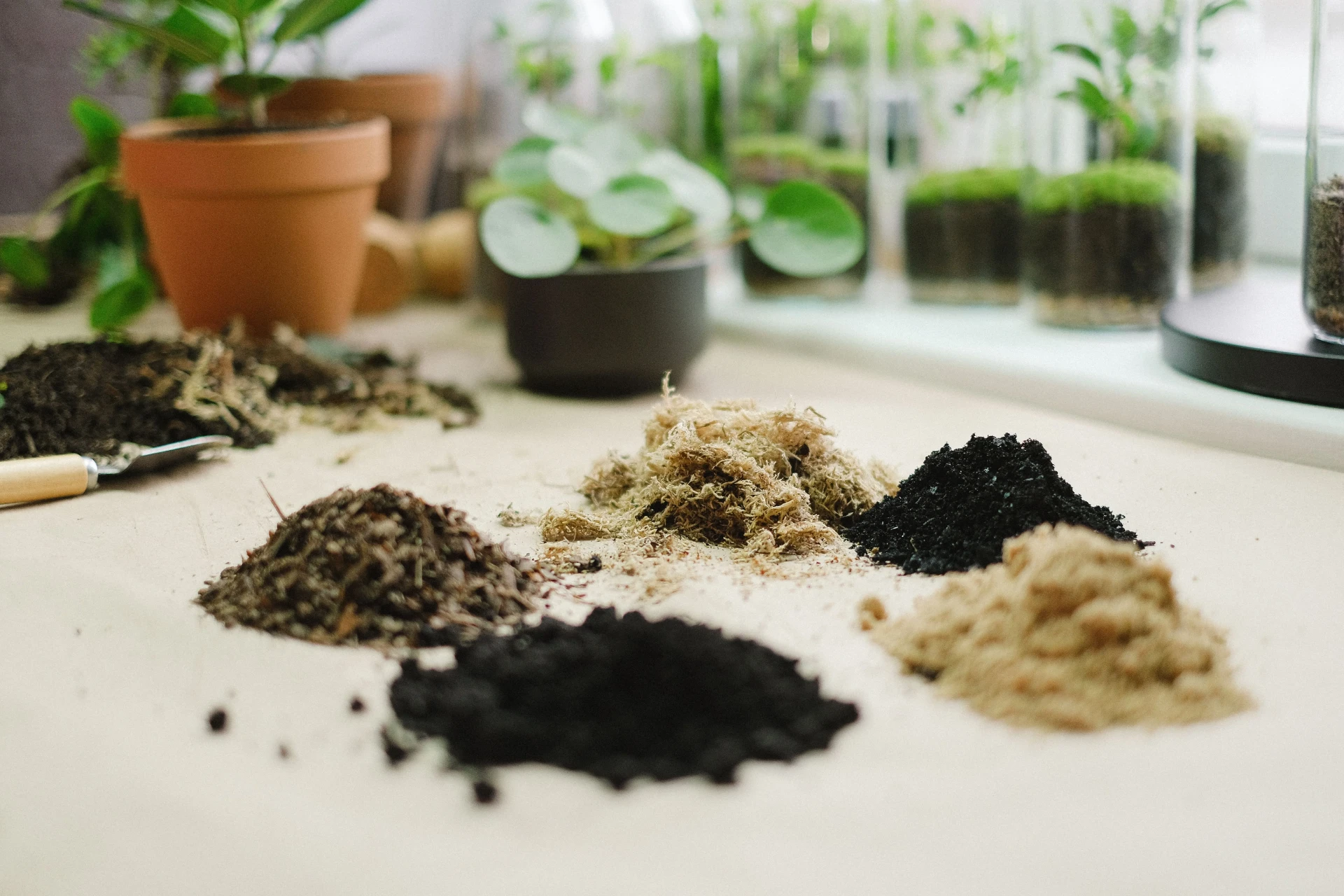
There is no secret terrarium soil recipe that separates successful jars from failed ones. What matters is what happens around the roots after the lid goes on.
A closed terrarium needs a substrate that can stay moist without quickly becoming dense, airless sludge. The practical challenge is balancing moisture retention with physical structure and air space.
Soil is not the same thing as substrate
People commonly search for terrarium soil, but the root-growing material in a terrarium is more usefully thought of as substrate or growing medium.
Outdoor garden soil contains mineral particles, organic matter and variable amounts of clay, silt and sand. Commercial soilless media are built from lighter ingredients designed for container culture.
In a small glass vessel with no conventional drainage hole, a controlled root environment is more useful than a miniature shovel of backyard earth.
Can you use regular potting mix?
Sometimes. A quality low-fertility soilless potting medium can already be a perfectly reasonable terrarium base.
Look for lightweight ingredients such as peat or coco coir, bark, perlite or vermiculite and then judge the finished texture. A loose structured medium is more useful than a fine mix that collapses into a wet mass.
Why not just use garden soil?
Garden soil is designed to function in a much larger outdoor soil profile. In a small glass container it can be too heavy, compact readily and introduce unnecessary organisms, weed seeds or pathogens.
A clean purchased soilless medium gives you much greater control over the root environment.
The four jobs of terrarium substrate
| Job | Why it matters |
|---|---|
| Hold usable moisture | Humidity-loving tropical roots should not require constant watering |
| Preserve air space | The root zone still needs physical structure in a humid enclosure |
| Resist compaction | The mix should not quickly collapse into dense mud |
| Avoid excessive fertility | Closed jars benefit from restrained, manageable plant growth |
Terrarium Atlas beginner substrate recipe
| Ingredient | Amount | Primary job |
|---|---|---|
| Low-fertility soilless potting mix | 2 parts | Moisture-retentive growing base |
| Fine orchid bark | 1 part | Coarse organic structure |
| Perlite or pumice | 1 part | Mineral structure / pore space |
| Chopped sphagnum | Optional modest amount | Additional moisture retention and fiber |
If your purchased base mix already contains substantial bark and perlite, adding a full extra portion of both may make it unnecessarily coarse. Build from the material in front of you rather than following arithmetic blindly.
A simple hand test
Moisten the mix lightly and squeeze a handful. You are not performing a laboratory test; you are checking for obvious problems.
A reasonable mix should feel moist, springy or crumbly and structurally mixed. It should not behave like soup, sticky mud or a compact clay ball. If water runs freely from your hand, it is already wetter than needed for planting.
Coco coir: useful, but not mandatory
Coco coir can provide a lightweight moisture-retentive base and is widely used in soilless media. A very fine coir-heavy blend can still benefit from bark, perlite or pumice for additional structure.
If your purchased potting medium already contains coir, you do not automatically need another bag of it.
Peat moss: does it work?
Yes. Peat is a long-established moisture-holding component of soilless growing media and appears in traditional ABG-style formulations.
Some builders prefer coir for environmental sourcing reasons. That is a separate question from whether peat can function horticulturally as a growing-medium ingredient.
Orchid bark: the structural workhorse
Fine orchid bark adds larger particles among finer moisture-retentive ingredients and helps the substrate resist becoming uniformly dense.
Choose an appropriate particle size for the container. Huge orchid chunks can overwhelm a miniature root zone. Bark is a structural ingredient rather than a complete general-purpose substrate for terrestrial tropical plants.
Perlite and pumice
Perlite is inexpensive, lightweight and useful for increasing mineral structure and pore space. Its main aesthetic drawback is that the white pieces can look artificial when they migrate to the surface.
Pumice can play a similar structural role while being heavier and more natural-looking. You do not need both.
Sphagnum moss: moisture buffer, not mandatory filler
Chopped or long-fiber sphagnum appears in many terrarium and ABG-style mixes because it can hold moisture while adding fibrous structure.
More sphagnum is not automatically better. Add it when it performs a specific function rather than collecting every famous terrarium ingredient.
What is ABG mix?
ABG is a classic tropical vivarium and terrarium substrate style. A commonly cited formulation uses roughly 2 parts tree fern fiber, 2 parts orchid bark, 1 part sphagnum, 1 part peat and 1 part charcoal.
Exact versions vary. The useful lesson is the design approach: combine moisture retention with coarse durable structure and resistance to compaction rather than treating one historical formula as sacred arithmetic.
Do you need ABG mix for a closed terrarium?
No. ABG-style substrates are useful, especially in larger naturalistic builds, but a simple plant-only jar does not fail because it uses an appropriate commercial soilless medium instead.
Use the complicated mix when the function justifies it, not because more ingredients automatically mean higher quality.
Do you need tree fern fiber?
No. Tree fern fiber is associated with traditional ABG formulas, but the structural function matters more than the exact material. Beginners can build an effective plant-only substrate without it.
Does terrarium substrate need activated charcoal?
Not necessarily. Charcoal appears in several established terrarium instructions, but it is not the defining ingredient of a successful root zone.
Water balance and substrate structure remain more important. Charcoal is optional and deserves a separate evidence-based decision rather than being used as mold or overwatering insurance.
Worm castings, compost and fertilizer
For a simple closed ornamental terrarium, heavy nutrient enrichment is usually unnecessary. The design goal is controlled, manageable plant growth rather than maximum biomass.
Worm castings and compost may have roles in specialized systems, but beginners generally benefit from starting lean.
What about vermiculite or sand?
Vermiculite is a legitimate moisture-holding potting-medium ingredient, but when a beginner needs to make a fine wet mix more structured, perlite or pumice is often the more intuitive addition.
Fine sand can increase density and is not Terrarium Atlas's default recommendation for a general closed tropical substrate.
Do not default to cactus soil for a closed tropical terrarium
Cactus and succulent mixes target a different growing strategy: rapid drying for drought-adapted plants. A closed tropical enclosure intentionally retains humidity and moisture.
How deep should terrarium substrate be?
Use enough growing medium to accommodate the actual root systems of your plants rather than applying one universal inch measurement to every jar.
More substrate is not automatically safer. Excess depth consumes display space and holds more total water.
Substrate is not the drainage layer
The substrate is where roots grow. A reservoir, if used, sits below it. LECA or gravel underneath does not make a dense saturated growing medium suddenly airy.
Match the substrate to the plants
| Planting style | Substrate emphasis |
|---|---|
| Fittonia-heavy | Moisture-retentive but airy general tropical mix |
| Fern-heavy | Reliable moisture retention with continued structure |
| Peperomia-heavy | Avoid a dense permanently saturated root zone |
| Moss-dominant | Surface moisture and support may matter more than deep conventional rooting |
| Mixed tropical | Balanced general-purpose blend for species with overlapping needs |
Premade substrate vs. DIY
Neither is inherently better. Premade substrate makes sense when you are building one or two terrariums and do not want multiple leftover ingredient bags.
DIY becomes more attractive when you build repeatedly, already own the components or want control over texture. Complexity is not a synonym for quality.
What to look for in a premade terrarium mix
- Lightweight structure
- Visible coarse material where appropriate
- A moisture-retentive base
- No excessive fertilizer load
- Ingredients suited to tropical plants
Useful ingredients can include coir, peat, bark, sphagnum, perlite, pumice and charcoal. The label does not need every one of them. You are buying functions, not bingo squares.
Red flags in a terrarium substrate
- Extremely dense wet material
- Heavy fertilizer loading
- Mostly ordinary garden soil
- A cactus / succulent drying strategy for tropical closed plants
- Substrate that begins already soaking wet
- Miracle claims that promise to prevent overwatering, mold or bad lighting
How wet should substrate be when building?
Damp, not dripping. Plant root balls, live moss and hardscape may already contribute moisture, so beginning with saturated substrate makes first-week balancing unnecessarily difficult.
What if your current substrate stays too wet?
Do not automatically rebuild. First determine whether the problem is too much initial water, repeated watering, an extremely tight system, inappropriate plant choice or genuinely poor substrate structure.
If moisture management improves but the medium remains structurally poor and plant roots continue declining, replacement becomes more reasonable.
Three substrate approaches that can all work
| Approach | Use | Best for |
|---|---|---|
| Simple commercial | Quality low-fertility soilless mix | First builds and small jars |
| Terrarium Atlas beginner blend | 2 parts base + 1 bark + 1 perlite/pumice | Beginners wanting additional structure |
| ABG-style | Fibrous organic material + bark + moisture-retentive components | Larger naturalistic or enthusiast builds |
The best substrate is the one you understand
A copied recipe tells you what someone else used. Understanding moisture retention, air space, structural durability, restrained fertility and clean materials tells you what to do when your ingredients differ.
Frequently asked questions
- What is the best substrate for a closed terrarium?
- Use a light, relatively low-fertility medium that retains moisture while maintaining physical structure around roots. A suitable soilless potting mix can work, with bark and perlite or pumice added when more structure is useful.
- Can I use regular potting soil in a terrarium?
- A quality soilless commercial potting mix can work. Check its ingredients and texture and avoid dense mixes that compact easily.
- Can I use garden soil in a closed terrarium?
- Terrarium Atlas recommends avoiding ordinary garden soil because it can be heavy, compact readily and introduce unnecessary variables into a small closed container.
- What is a simple DIY terrarium substrate recipe?
- A practical Terrarium Atlas starting blend is 2 parts low-fertility soilless potting mix, 1 part fine orchid bark and 1 part perlite or pumice. Adjust it to the base mix and plants.
- Do I need ABG mix for a terrarium?
- No. ABG-style mixes are useful, but simpler appropriate soilless media can also work well in plant-only closed terrariums.
- What is ABG mix made from?
- A commonly cited ABG-style formula uses tree fern fiber, orchid bark, sphagnum moss, peat moss and charcoal. Exact modern recipes vary.
- Is coco coir good for closed terrariums?
- Yes. Coco coir can provide a useful moisture-retentive base, especially when combined with structural ingredients such as bark and perlite or pumice.
- Do terrariums need activated charcoal in the substrate?
- Not necessarily. Charcoal can be a useful optional component, but substrate structure and moisture management are more fundamental.
- How deep should terrarium substrate be?
- Use enough substrate to comfortably support the plants' actual root systems rather than following one universal depth measurement.
- Should terrarium substrate be wet when planting?
- It should generally be lightly moist or damp rather than saturated. It is easier to add water later than remove a large excess from a sealed container.
Related guides
Build & Substrate
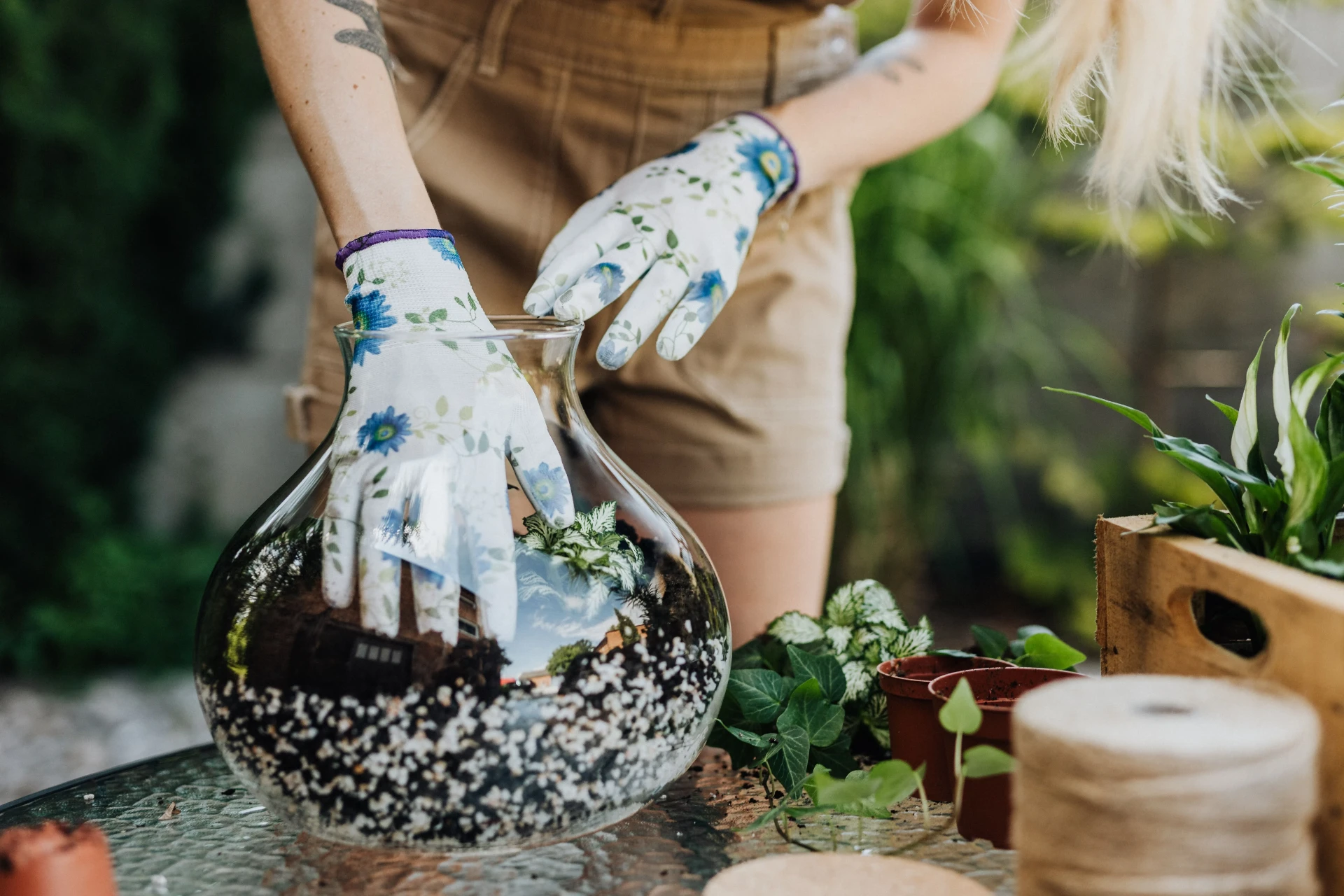
Terrarium Layers Explained: The Correct Order and What Each Layer Does
Learn the correct terrarium layer order, what drainage, mesh, charcoal and substrate actually do, and which layers are optional for a closed terrarium.
10 min readpublished
Terrarium Basics
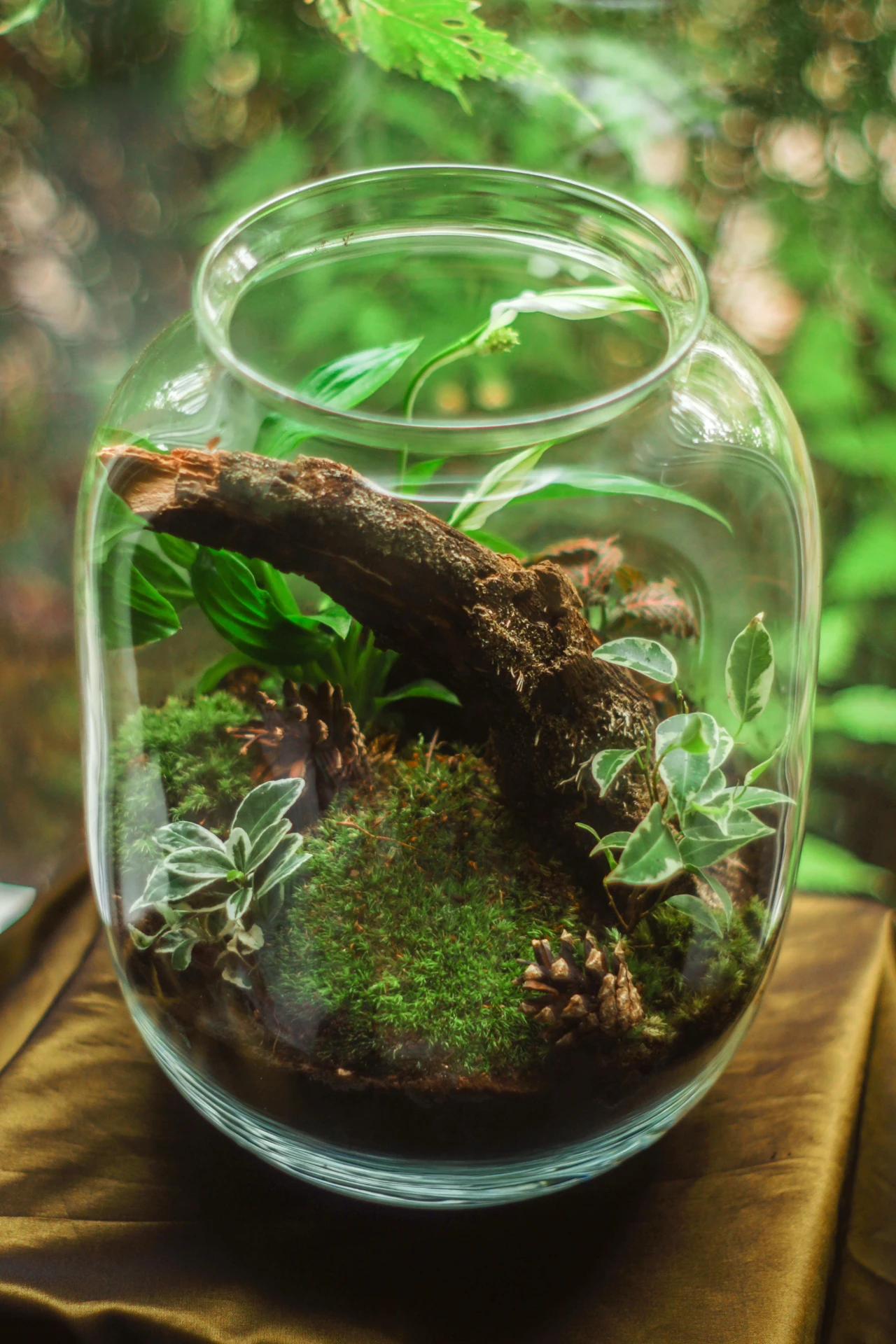
How to Make a Closed Terrarium: Beginner's Complete Guide
A full walkthrough of building your first sealed terrarium, from container choice to the first weeks of settling in.
14 min readpublished
Care & Troubleshooting
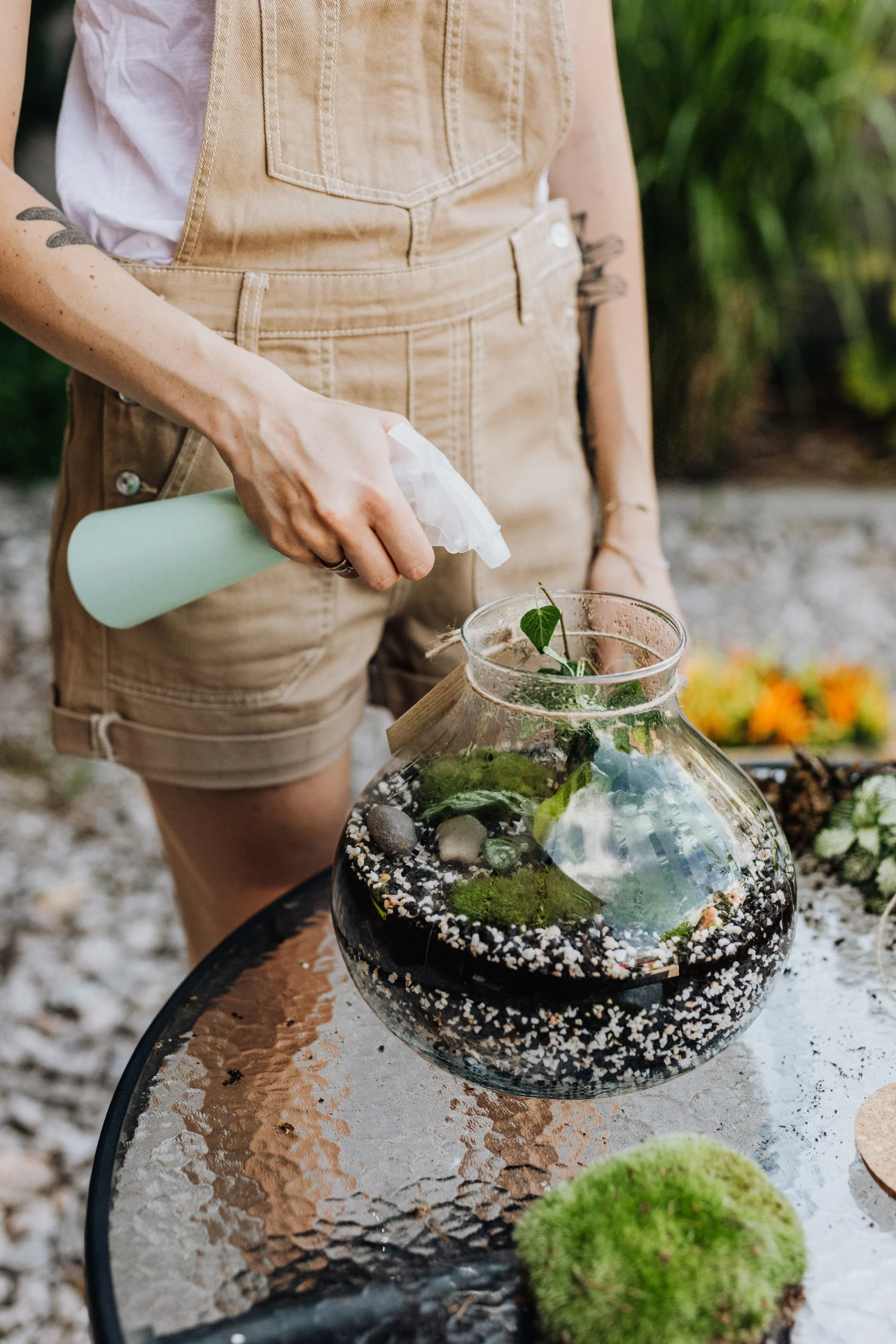
How Often Should You Water a Closed Terrarium?
A balanced closed terrarium may go months without added water. Learn how to read the glass, substrate, and plants so you water only when the system actually needs it.
11 min readpublished
Build Your First Terrarium With Confidence
Get the free Closed Terrarium Quick-Start Checklist.
Newsletter coming soon