Build & Substrate
Terrarium Layers Explained: The Correct Order and What Each Layer Does
Learn the correct terrarium layer order, what drainage, mesh, charcoal and substrate actually do, and which layers are optional for a closed terrarium.
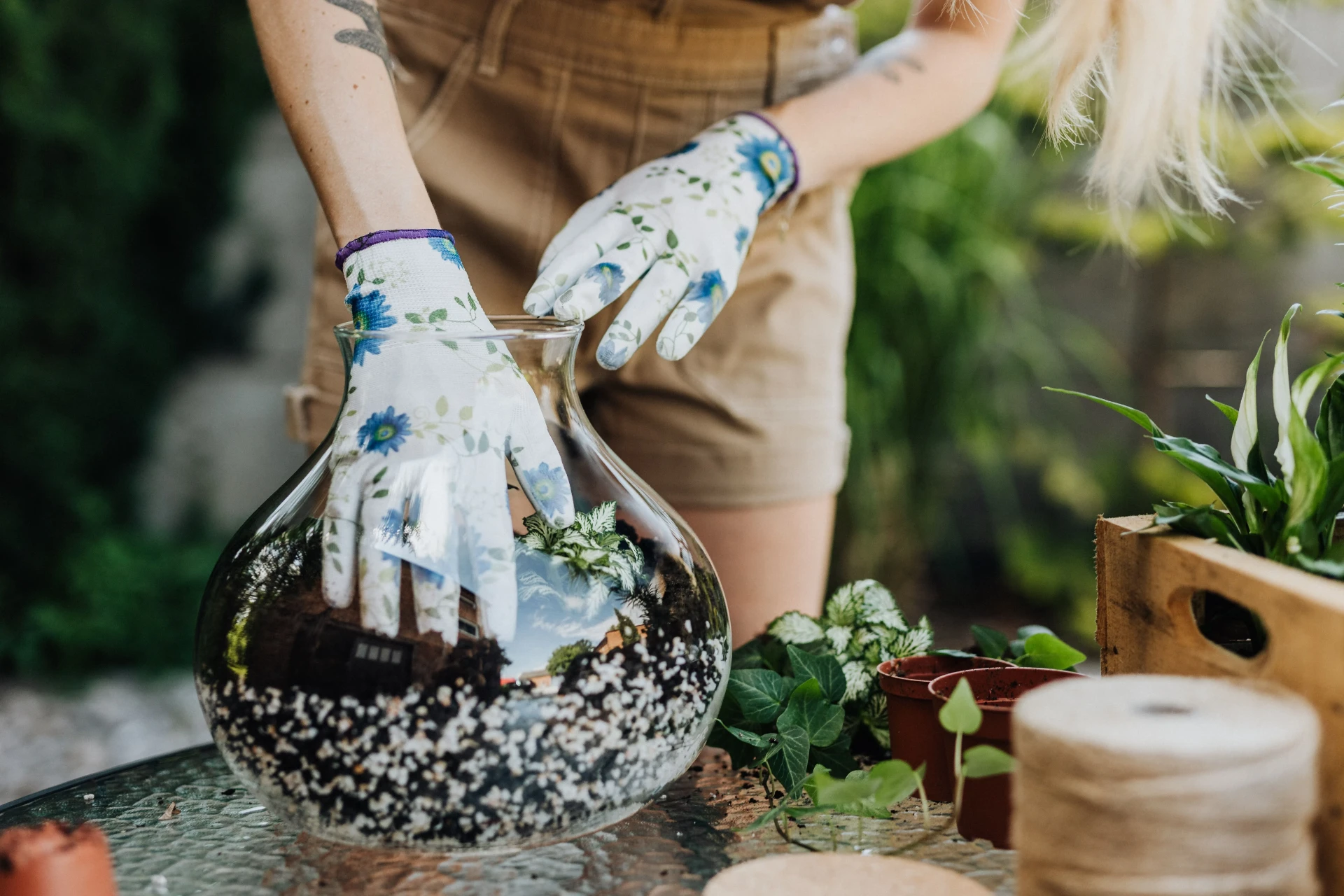
A typical closed terrarium is built from the bottom up like this: drainage layer → barrier → optional activated charcoal → substrate → plants → moss or decorative top dressing.
That is the most common beginner setup, but it is not the only workable one. The useful part is understanding what each layer is supposed to accomplish. Once you know the function, you can decide which materials make sense for your container instead of blindly following a recipe.
Terrarium layers at a glance
| Layer | Purpose | Essential? |
|---|---|---|
| Drainage / reservoir layer | Holds some excess water below much of the root zone | Optional but useful |
| Barrier / mesh | Keeps substrate from migrating into the reservoir | Optional |
| Activated charcoal | Adsorbs some compounds and may help with odors | Optional |
| Substrate | Supports roots while holding moisture, nutrients and air | Yes |
| Plants | Main living component | Yes |
| Moss / top dressing | Ground cover, appearance and surface moisture | Optional |
| Hardscape | Structure and visual design | Optional |
The substrate is the truly essential layer. Everything underneath it exists mainly to help manage water, keep materials separated or make the system easier to build and maintain.
Why terrariums use layers
A conventional plant pot normally has drainage holes. A closed terrarium usually does not. Excess water therefore cannot simply leave through the bottom.
Many terrarium designs use coarse material beneath the substrate to create a separate place where excess water can collect. Some horticultural guidance still recommends washed gravel or expanded clay for this purpose, while other current guidance considers a bottom rock layer unnecessary when the growing medium and watering are managed correctly.
That disagreement is useful. It shows that a terrarium does not survive because of one magical bottom layer. It survives because the roots receive a suitable balance of moisture, air, light and compatible growing conditions.
Layer 1: drainage or reservoir material
The bottom layer commonly contains LECA, washed aquarium gravel, small pebbles or another clean inert coarse material.
Its practical purpose is to create physical space below the growing substrate where some excess water can collect. In a clear container, it also gives you a visible place to notice accumulating water.
There is no universal depth. For a small or medium decorative terrarium, a modest visible layer is normally enough. Leaving adequate room for the root-growing substrate is more important than making the bottom layer dramatic.
LECA or gravel?
Both can perform the basic reservoir role.
| Material | Practical strengths |
|---|---|
| LECA | Lightweight, porous, uniform, reusable and convenient in larger containers |
| Gravel | Easy to find, often inexpensive, natural-looking and available in many sizes |
Neither material automatically creates a healthier terrarium. Choose according to container size, appearance, availability and how much weight you want at the base.
Layer 2: the barrier
A barrier sits between coarse reservoir material and the growing substrate. Fine plastic mesh, fiberglass screen or another water-permeable synthetic separator can work.
Its job is simple: keep fine growing medium from gradually falling into the larger spaces below.
A barrier is not essential to plant survival. But if you deliberately create a separate reservoir layer, a barrier is inexpensive and helps keep that separation intact.
Layer 3: activated charcoal
Activated charcoal is one of the most repeated ingredients in terrarium diagrams and one of the most misunderstood.
Activated carbon can adsorb certain compounds onto its porous surface. That provides a defensible filtering and odor-buffering role, and several horticultural terrarium guides include charcoal.
That does not mean a terrarium will fail without it. Charcoal is an optional supporting material. It cannot compensate for permanently waterlogged substrate, incompatible plants, poor light or significant decaying material.
If you use charcoal, it may appear as a thin layer near the reservoir, around the separator or mixed into the growing medium. Its exact visual position is less important than many diagrams imply.
Layer 4: substrate
This is the most important physical layer because it is where most plant roots actually grow.
- Hold usable moisture
- Maintain air space around roots
- Provide physical support
- Provide an appropriate nutrient environment
- Resist rapid compaction
Dense outdoor garden soil is a poor default for a closed terrarium because it can compact heavily and behave unpredictably in a small glass container. A clean soilless growing medium or terrarium-oriented substrate is easier to control.
Use enough substrate to accommodate the plants' roots comfortably. In a container with limited height, useful root-zone depth deserves priority over an oversized decorative drainage band.
Hardscape, plants and moss
Wood and stone are design elements rather than required biological layers. Position major hardscape securely before fragile planting when that makes the build easier.
Plants are the main living component. Choose compact species that suit the humid closed environment and leave room for growth.
Live moss or another top dressing can cover exposed substrate and soften transitions around hardscape. Moss is optional and should not be used as an excuse to keep the entire root zone saturated.
The recommended beginner layer order
| Step | Material | Role |
|---|---|---|
| 1 | LECA or washed gravel | Optional excess-water reservoir |
| 2 | Fine mesh | Keeps growing medium separated |
| 3 | Activated charcoal | Optional adsorptive / odor-buffering material |
| 4 | Terrarium substrate | Primary root-growing environment |
| 5 | Hardscape | Structure and design |
| 6 | Compatible plants | Main living component |
| 7 | Live moss / top dressing | Optional finish and ground cover |
This is a forgiving beginner system, not the only correct terrarium architecture.
Can you build a terrarium without a drainage layer?
Yes. A closed terrarium without a dedicated aggregate layer can work when the substrate is appropriate, the plants are compatible and watering is restrained.
For a first build, Terrarium Atlas still considers a modest visible reservoir convenient because beginners are often learning how little supplemental water a closed terrarium actually needs. Once moisture management is familiar, simpler no-reservoir systems are entirely reasonable.
Can you skip charcoal?
Yes. Charcoal can provide some adsorption and odor-buffering value, but it does not indefinitely purify a terrarium and it is not foundational to plant survival.
- Prioritize healthy compatible plants
- Use an appropriate substrate
- Control moisture
- Provide appropriate indirect light
- Remove significant decaying material when needed
Can you skip the mesh?
Yes. But when a distinct coarse reservoir is used, mesh is useful because it slows substrate from settling into the spaces between LECA or gravel.
Common terrarium-layer mistakes
More layers do not automatically create a better terrarium. Rocks, sand, charcoal, moss, soil, more sand and decorative stone can create an attractive parfait while taking useful space away from roots.
Another common mistake is making the reservoir disproportionately deep because it looks dramatic through glass. Plants grow primarily in the substrate, not in the decorative aggregate below it.
The most important misconception is assuming the drainage layer fixes overwatering. Once the reservoir is full, additional water remains in the same sealed container and can saturate the growing medium.
Does the order really matter?
Functionally, yes in some places. Roots need growing medium. A separator only separates materials when placed between them. A lower reservoir only stays below the root zone when it is physically below it.
But do not treat the diagram as chemistry. Charcoal does not become useless merely because it is mixed into substrate instead of forming a perfect black stripe. Think in terms of function rather than decorative symmetry.
The most important layer isn't gravel or charcoal
It is the substrate your plants actually grow in. Reservoir layers, barriers and charcoal can make a terrarium easier to manage, but none compensates for poor growing medium or excessive water.
For a first build, keep the system simple: modest reservoir → separator → optional charcoal → generous appropriate substrate → compatible plants. Then focus on moisture and light rather than perfectly straight bands in the glass.
Frequently asked questions
- What layer goes first in a terrarium?
- If you are using a conventional reservoir system, LECA, gravel or another clean coarse aggregate goes at the bottom. A barrier can then separate it from the growing substrate.
- Does charcoal go before or after mesh?
- Both arrangements appear in terrarium-building methods. The important functions are keeping fine substrate out of the reservoir and placing charcoal where it can interact with moisture. Its exact position is less important than sensible moisture management.
- How many layers should a terrarium have?
- There is no required number. Plants need an appropriate growing substrate. Many beginner builds also use a reservoir and separator, while charcoal and top dressing are optional.
- Do I need rocks at the bottom of a terrarium?
- Not necessarily. Reputable horticultural guidance differs on bottom aggregate layers. A reservoir can be useful, but careful watering and appropriate growing media remain essential either way.
- Can I use regular potting soil in a terrarium?
- A suitable lightweight soilless potting medium can work, but dense outdoor garden soil is not a good default. Closed terrariums benefit from media that retain moisture without compacting heavily.
- Is activated charcoal necessary in a terrarium?
- No. Activated charcoal can adsorb some compounds and may help with odors, but it is best treated as optional rather than essential.
- How deep should terrarium soil be?
- Use enough substrate to accommodate the plants' root systems comfortably. Prioritize useful root-zone depth over oversized decorative or reservoir layers.
Related guides
Build & Substrate
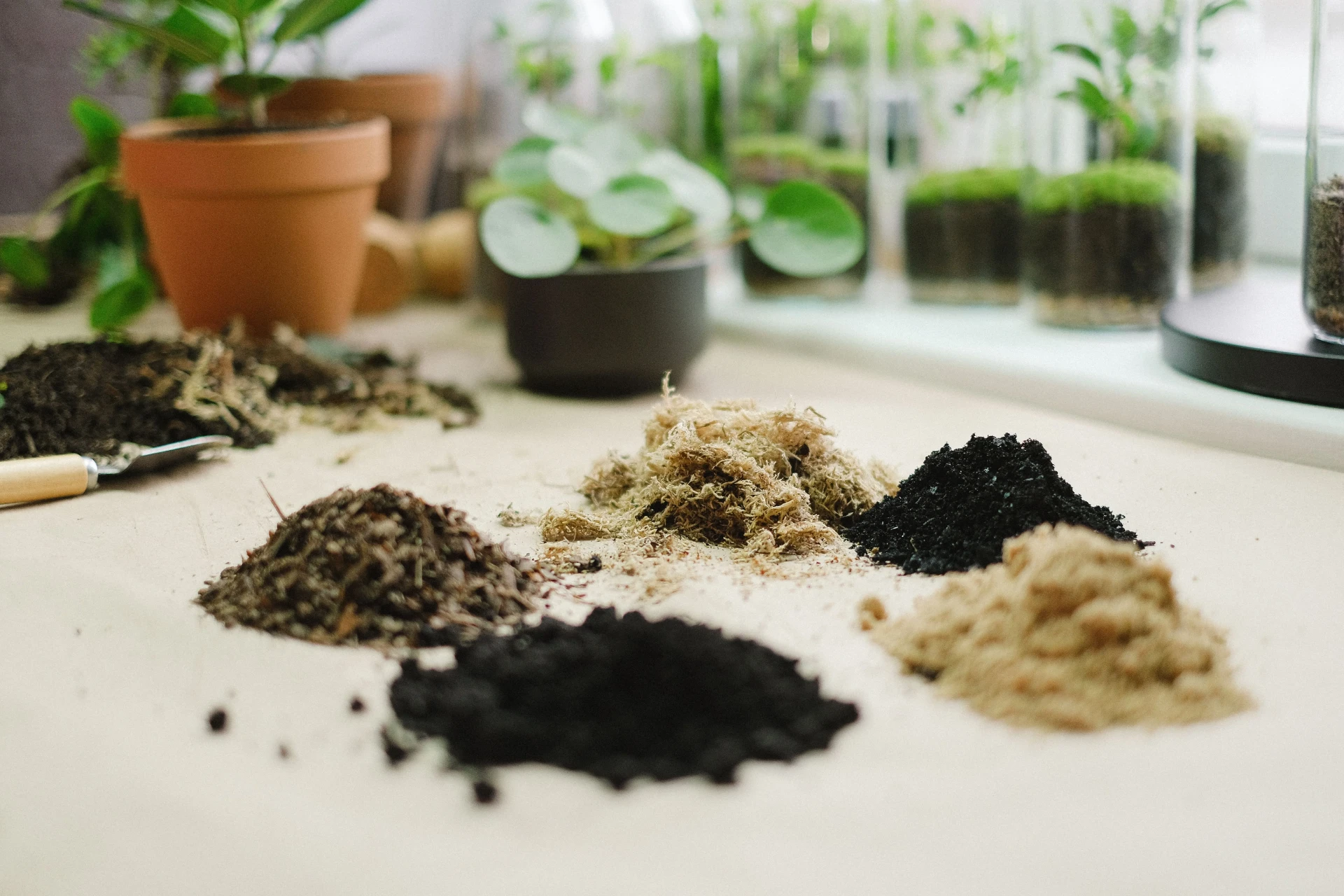
Best Terrarium Substrate Mix for Closed Terrariums
Learn what a closed-terrarium substrate actually needs to do, a simple beginner recipe, how ABG-style mixes work, and which ingredients are optional.
13 min readpublished
Build & Substrate
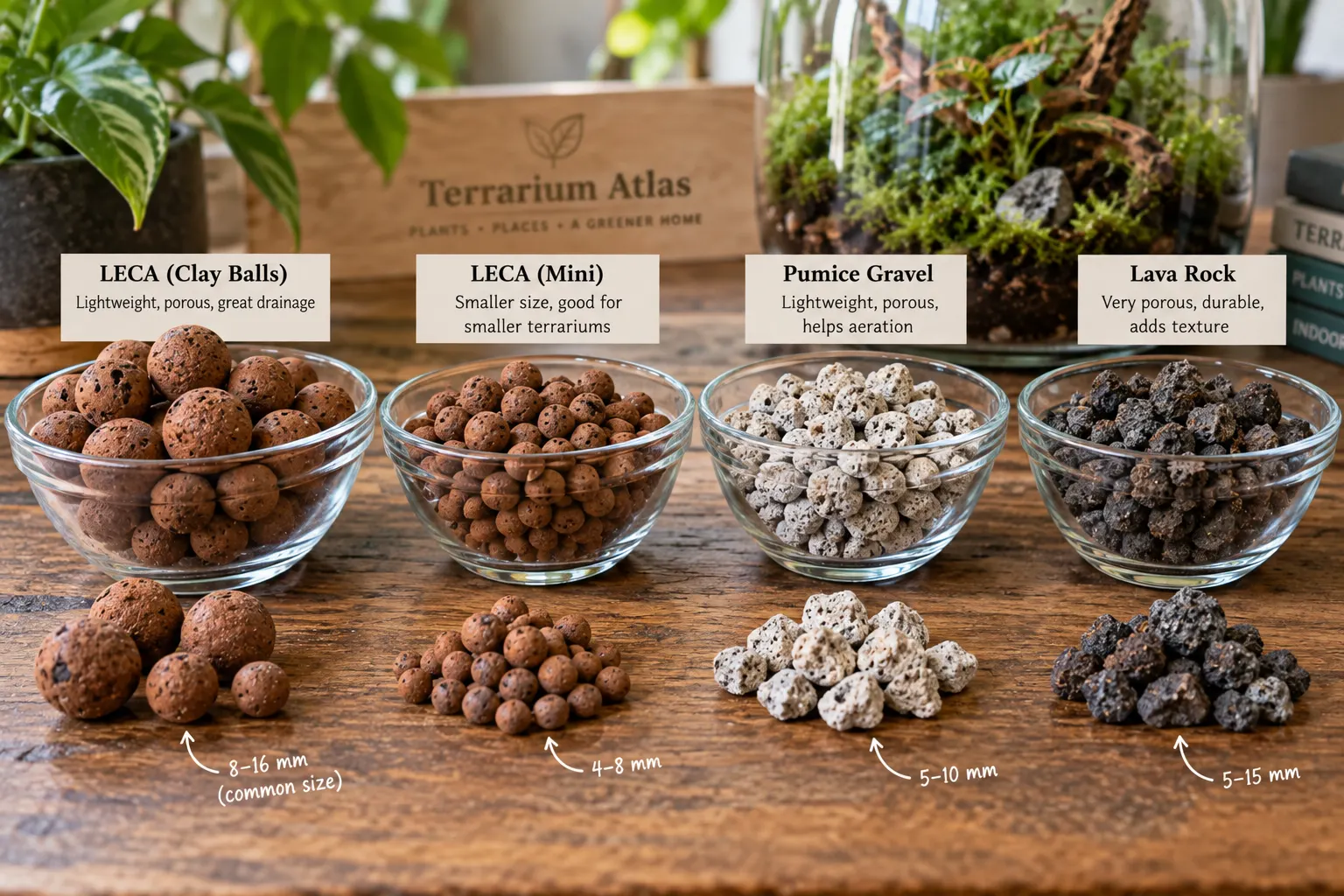
LECA vs Gravel for Terrarium Drainage: Which Is Better?
LECA is lighter and porous; gravel is simple and widely available. Compare both—and learn why neither one makes overwatering safe.
10 min readpublished
Build & Substrate
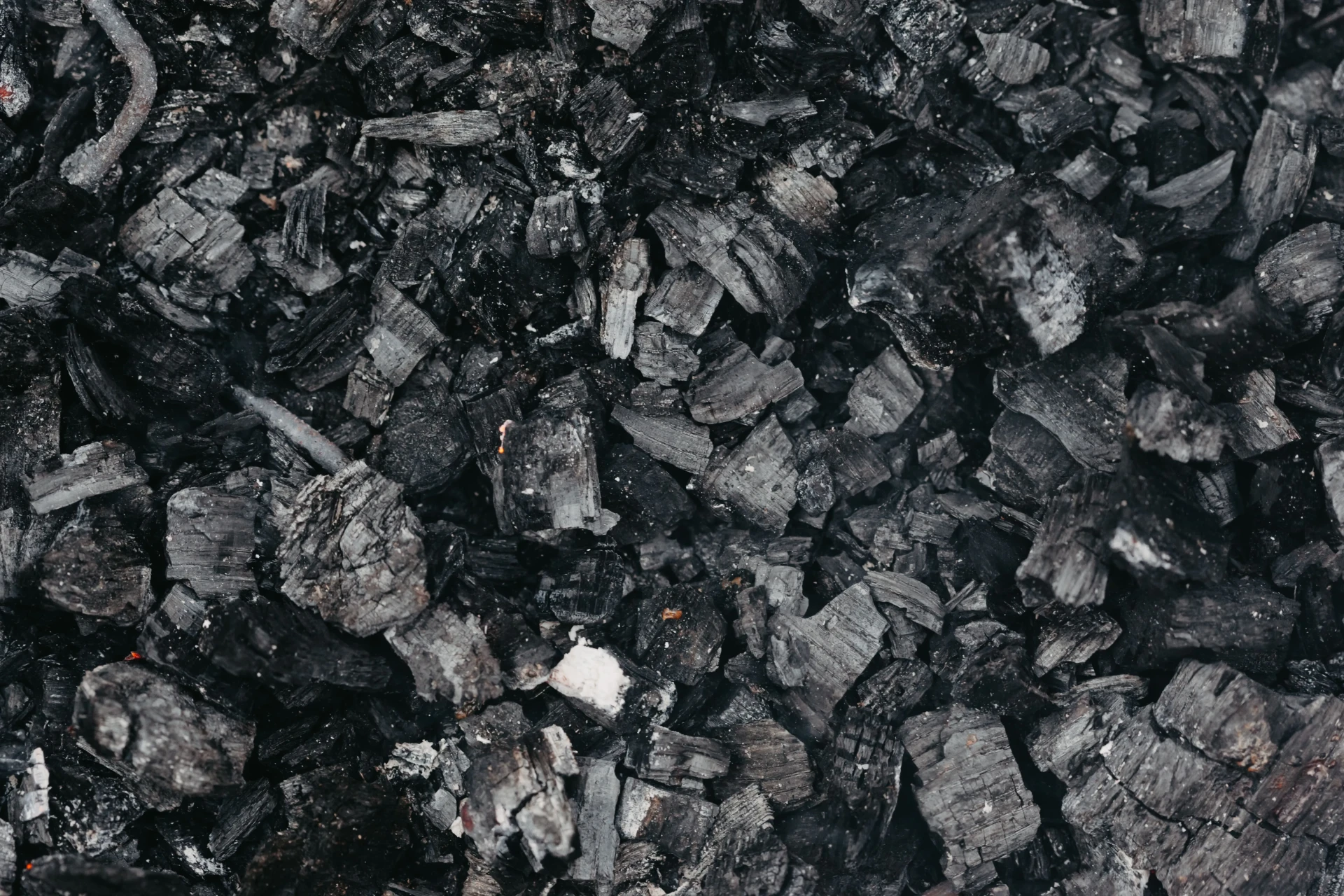
Do Terrariums Really Need Activated Charcoal?
Activated charcoal has real filtering properties, but that does not make it essential. Learn what charcoal can help with, what it cannot fix, and when you can skip it.
11 min readpublished
Build Your First Terrarium With Confidence
Get the free Closed Terrarium Quick-Start Checklist.
Newsletter coming soon