Build & Substrate
LECA vs Gravel for Terrarium Drainage: Which Is Better?
LECA is lighter and porous; gravel is simple and widely available. Compare both—and learn why neither one makes overwatering safe.
If you build a terrarium from a typical online diagram, the bottom layer is often explained with a simple phrase: the rocks provide drainage.
A closed glass terrarium normally has no drainage hole. Nothing is draining out. If LECA or gravel sits beneath the substrate, think of it more accurately as a reservoir: a separate space where some excess water can collect below the main root zone.
Both LECA and gravel can perform that role. LECA is generally the more convenient choice, but neither material is mandatory and neither can rescue a terrarium that is repeatedly overwatered.
Quick answer: LECA or gravel?
| Factor | LECA | Gravel |
|---|---|---|
| Reservoir function | Good | Good |
| Weight | Lighter | Heavier |
| Internal porosity | High | Usually much lower |
| Structural stability | Good | Good |
| Reusable | Yes | Yes |
| Easy to source | Moderate-high | Very high |
| Cost | Usually specialty product | Often inexpensive / local |
| Natural visual appearance | Depends on build | Often strong |
| Easy to rinse | Yes; often dusty initially | Yes |
| Protects against overwatering | No | No |
| Required for a closed terrarium | No | No |
What does a terrarium drainage layer actually do?
In a conventional flowerpot, drainage means water can leave through a hole. In a sealed jar, a bottom aggregate layer instead creates spaces where water can accumulate below the growing medium.
That is why reservoir layer or false bottom can be more precise terms than drainage when discussing closed vessels.
Do closed terrariums even need a drainage layer?
Not necessarily. Current reputable horticultural guidance is not uniform. Some modern guidance considers bottom rocks unnecessary for drainage, while other extension instructions still use gravel, pebbles or similar materials as a place for excess water to collect.
Terrarium Atlas therefore treats a bottom aggregate layer as optional. A closed terrarium can be built around suitable substrate, restrained watering, compatible plants and appropriate light with or without a false bottom.
What is LECA?
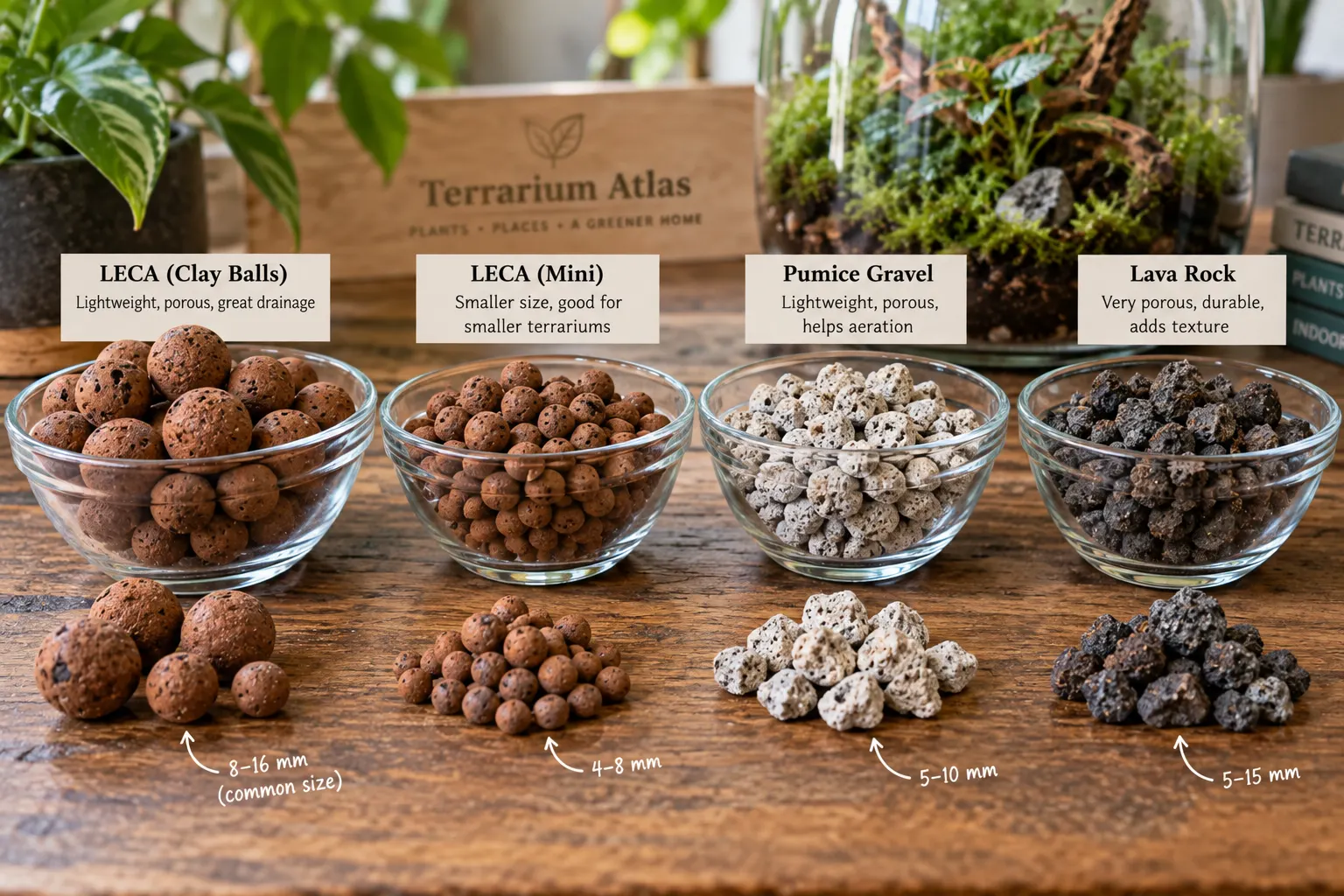
LECA stands for Lightweight Expanded Clay Aggregate. Clay is fired so it expands into porous ceramic particles commonly sold as LECA, expanded clay, clay pebbles or hydroponic clay balls.
Its useful terrarium properties are low bulk weight, durable physical structure, internal porosity and reusability.
LECA is porous, but do not treat it as an unlimited sponge
Expanded clay contains internal pores, but water absorption varies and it should not be portrayed as a material that automatically absorbs every watering mistake.
The defensible benefit is simpler: LECA forms a lightweight, porous and durable aggregate layer with spaces where water can collect.
What kind of gravel can you use?
Clean inert aquarium gravel, pea gravel or suitable small pebbles can perform the basic reservoir role.
- Avoid material that crumbles easily
- Avoid stone exposed to unknown chemicals
- Rinse off loose dirt and dust
- Avoid dangerously sharp material against delicate glass
LECA vs gravel: weight
Weight is LECA's clearest practical advantage. The difference may be trivial in a small jar but becomes meaningful in wide bowls, tanks, vivariums or any glass build that must be moved.
LECA vs gravel: porosity
LECA is internally porous while ordinary gravel is generally much denser. That changes bulk density and surface structure, but it does not prove that plants automatically grow better above LECA.
The plants' roots normally belong in the substrate above. Both materials can create open reservoir space.
Reservoir space depends on particle size too
Both LECA and coarse gravel leave voids between particles. Very fine material behaves differently, which is why fine sand is not equivalent to a coarse false bottom.
LECA vs gravel: cost and availability
Gravel often wins on simple sourcing. Many people already own aquarium gravel or clean decorative stone, while LECA is more often purchased as a horticultural or hydroponic product.
Do not buy a specialty product solely because an online diagram calls it mandatory.
LECA vs gravel: appearance
LECA commonly appears as uniform brown or reddish clay balls. Gravel offers a wider range of geological colors and textures. Because the bottom layer is visible through glass, aesthetics are a legitimate secondary consideration.
Rinse either material before use
LECA often arrives dusty and gravel can carry fine debris. Rinse the material before placing it in the terrarium.
Both materials are reusable
LECA and gravel can both be removed, cleaned and reused during a rebuild when they remain suitable.
Do you need mesh above LECA or gravel?
A separator is useful when you want to keep the reservoir physically distinct from the substrate. Without it, fine growing medium can gradually fall into the aggregate spaces.
The barrier is not an impenetrable root wall. Roots may eventually explore downward where conditions allow.
Does LECA wick water back into the substrate?
Some moisture movement may occur depending on contact, aggregate, water level and particle arrangement, but Terrarium Atlas does not recommend designing a watering strategy around an assumed automatic self-watering effect.
Can LECA or gravel prevent root rot?
No. A terrarium can still have saturated substrate, unhealthy roots, standing water and unsuitable plants above a perfect-looking false bottom.
How deep should the reservoir layer be?
Published recommendations vary, which is a good reason not to present one universal biological threshold. For an ordinary tabletop build, roughly an inch is a practical starting point if you choose to use a reservoir.
Tiny jars may need less or none. Larger builds may justify more.
Container size changes the decision
In a tiny jar, every centimeter allocated to aggregate reduces root-growing space, so skipping a separate false bottom can be reasonable.
In a larger tank, LECA becomes more attractive because the weight difference between expanded clay and a deep layer of dense stone can become substantial.
What about lava rock, perlite or sand?
Clean porous lava rock can serve the same broad reservoir role. Perlite is better suited to Terrarium Atlas's beginner substrate mixes because it is extremely lightweight and visually distinctive. Fine sand is less attractive when the goal is an open coarse reservoir.
What if water is visible in the reservoir?
A small amount of water below the substrate is not automatically a disaster. Ask whether the substrate is saturated, the water level is increasing and the plants are healthy.
If the reservoir repeatedly fills until the growing medium is saturated from below, the terrarium contains too much water.
Is LECA worth buying for one terrarium?
If you already have clean suitable gravel and the build is small, there is no need to buy LECA merely to follow a recipe.
LECA becomes easier to justify when you plan several builds, need to minimize weight or want reusable uniform aggregate.
Terrarium Atlas verdict
- Choose LECA when weight matters, the build is larger, you want uniform reusable aggregate or you are buying material specifically for the reservoir
- Choose gravel when you already have suitable clean material, the build is small, natural stone suits the design or lowest-cost sourcing matters
- Choose neither when the container is tiny, root-zone depth is more valuable or you are intentionally using a no-reservoir approach
The bigger decision is whether you can keep the root zone appropriately moist without saturating it. A beautiful LECA layer under poor substrate and excessive watering is still a poorly managed terrarium.
Frequently asked questions
- Is LECA better than gravel for terrariums?
- LECA is usually more convenient because it is lighter and porous while still creating a stable reservoir. Gravel can perform the same basic physical role and may be cheaper or easier to source.
- Do closed terrariums need a drainage layer?
- Not necessarily. Current horticultural recommendations differ, so a bottom reservoir should be treated as optional rather than mandatory.
- What does LECA stand for?
- LECA stands for Lightweight Expanded Clay Aggregate. It consists of porous fired clay particles used in horticultural and hydroponic systems.
- How much LECA should I use in a terrarium?
- For many tabletop terrariums, roughly one inch is a practical starting point if you choose to use a reservoir. Tiny jars may need less or none.
- Can I use aquarium gravel in a terrarium?
- Yes. Clean inert aquarium gravel can create reservoir space. Rinse it before use and do not assume it protects the terrarium from overwatering.
- Does LECA absorb excess terrarium water?
- LECA is porous and can interact with water, but absorption varies and it should not be treated as an unlimited sponge. Its more reliable advantages are low weight, pore space and structural stability.
- Does gravel prevent root rot?
- No. Gravel can create space below the substrate, but chronic overwatering can still saturate the root zone and contribute to root problems.
- Do I need mesh over LECA?
- Mesh is useful when you want to keep fine substrate from falling into the aggregate layer. It is optional but commonly practical.
- Can I use lava rock instead of LECA?
- Yes. Clean porous lava rock can serve as another coarse false-bottom material.
- Is a drainage layer the same as terrarium substrate?
- No. The reservoir layer sits beneath the root-zone substrate. The substrate is the growing medium in which the plants are planted.
Related guides
Build & Substrate
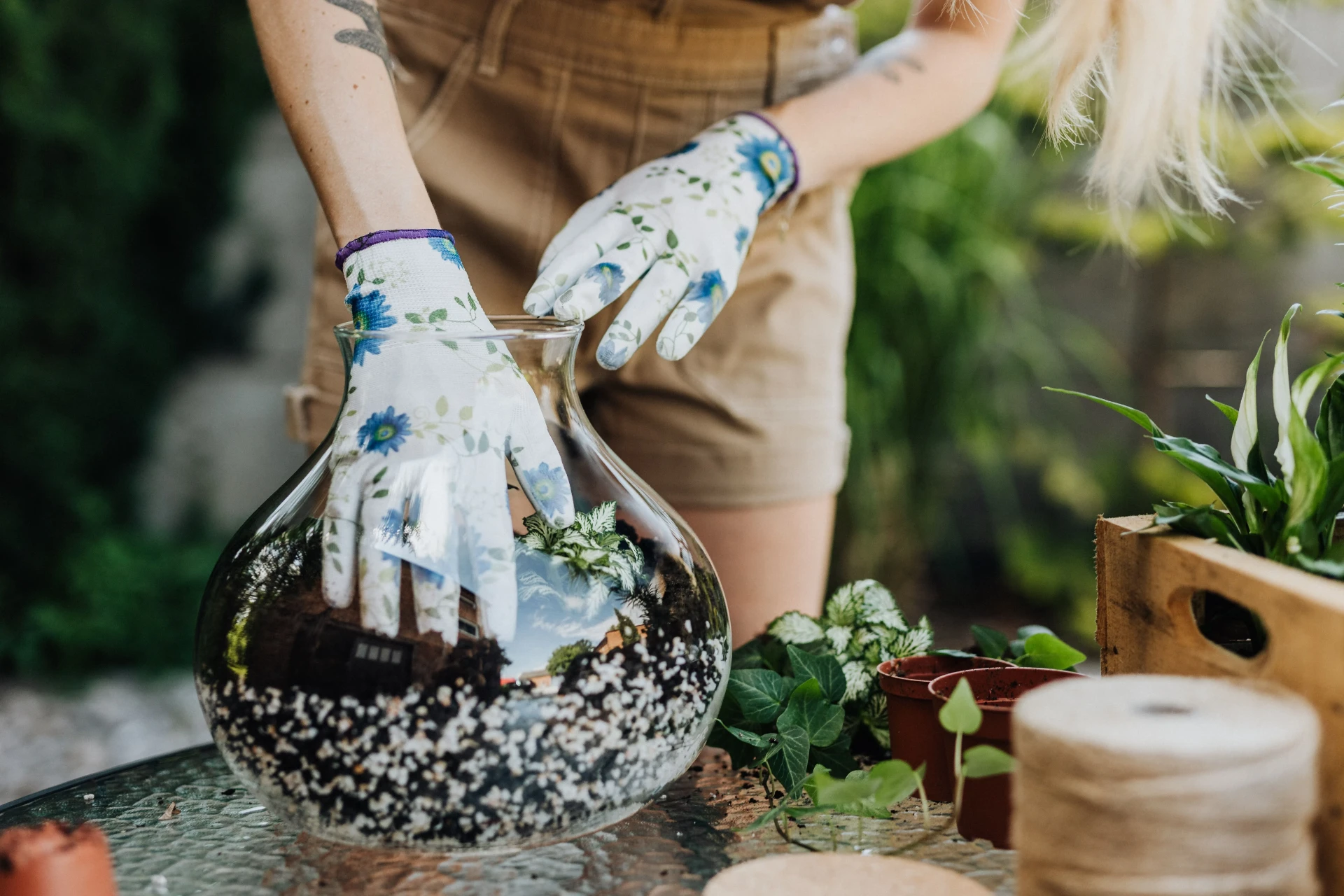
Terrarium Layers Explained: The Correct Order and What Each Layer Does
Learn the correct terrarium layer order, what drainage, mesh, charcoal and substrate actually do, and which layers are optional for a closed terrarium.
10 min readpublished
Build & Substrate
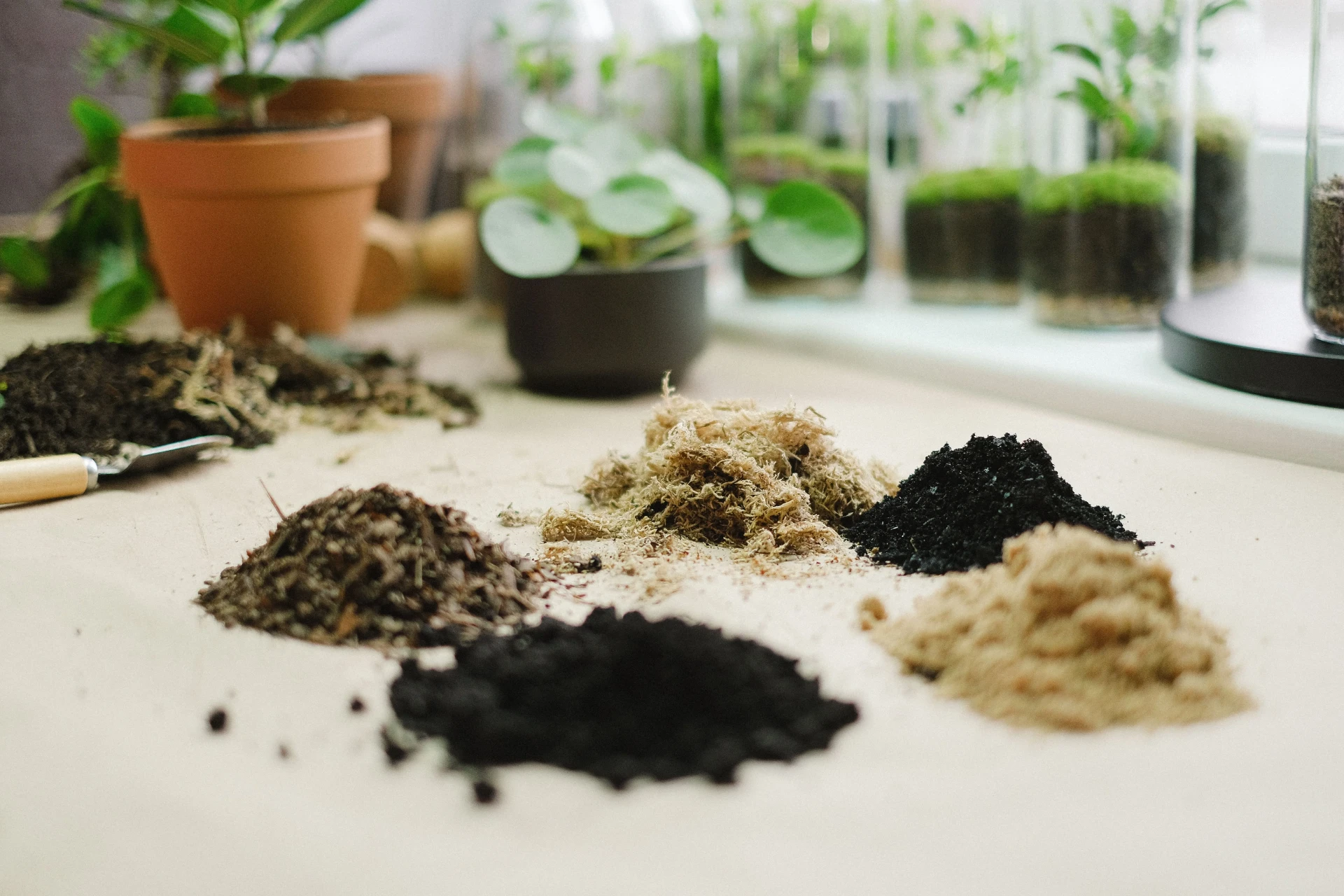
Best Terrarium Substrate Mix for Closed Terrariums
Learn what a closed-terrarium substrate actually needs to do, a simple beginner recipe, how ABG-style mixes work, and which ingredients are optional.
13 min readpublished
Terrarium Basics
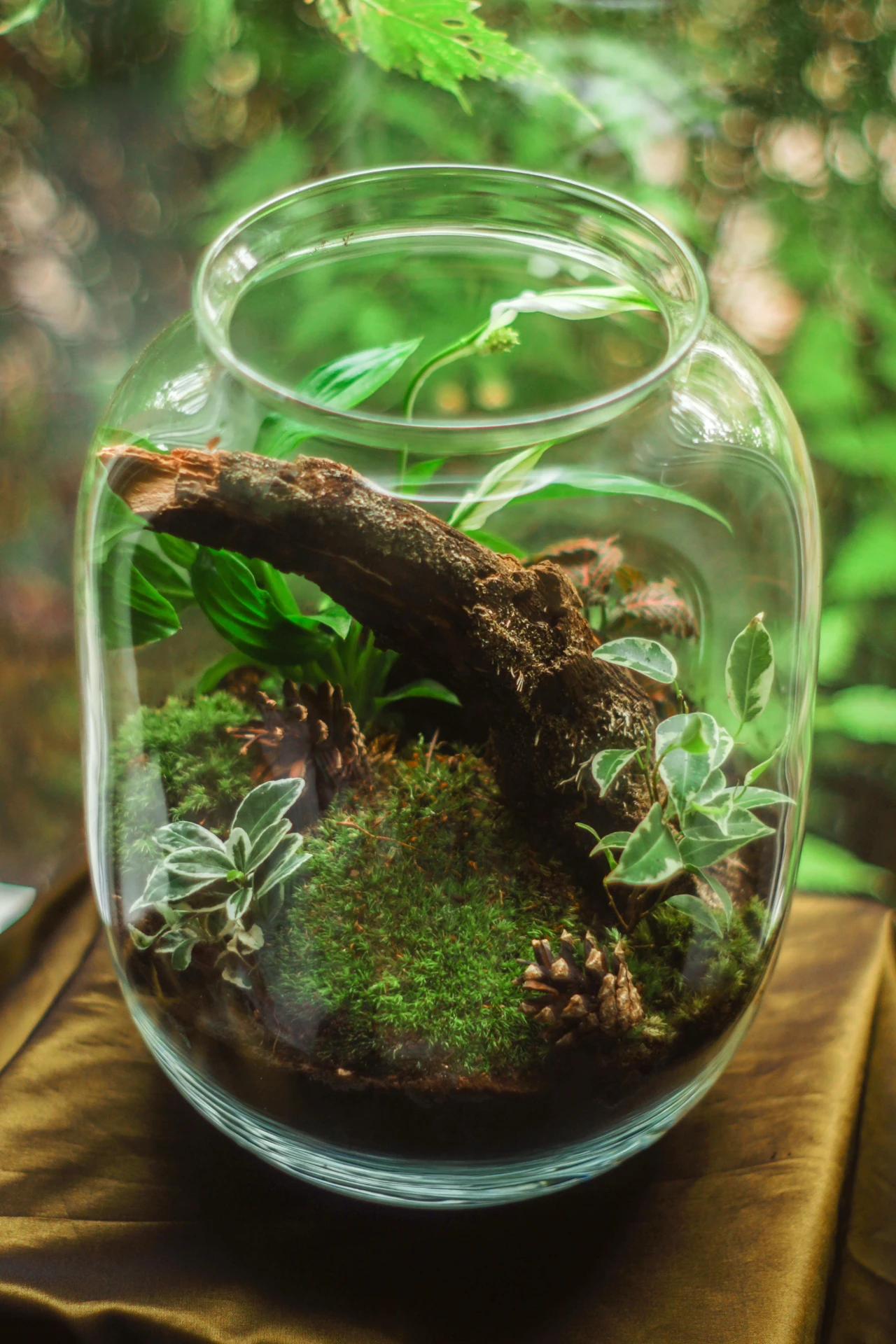
How to Make a Closed Terrarium: Beginner's Complete Guide
A full walkthrough of building your first sealed terrarium, from container choice to the first weeks of settling in.
14 min readpublished
Build Your First Terrarium With Confidence
Get the free Closed Terrarium Quick-Start Checklist.
Newsletter coming soon