Care & Troubleshooting
How Often Should You Water a Closed Terrarium?
A balanced closed terrarium may go months without added water. Learn how to read the glass, substrate, and plants so you water only when the system actually needs it.
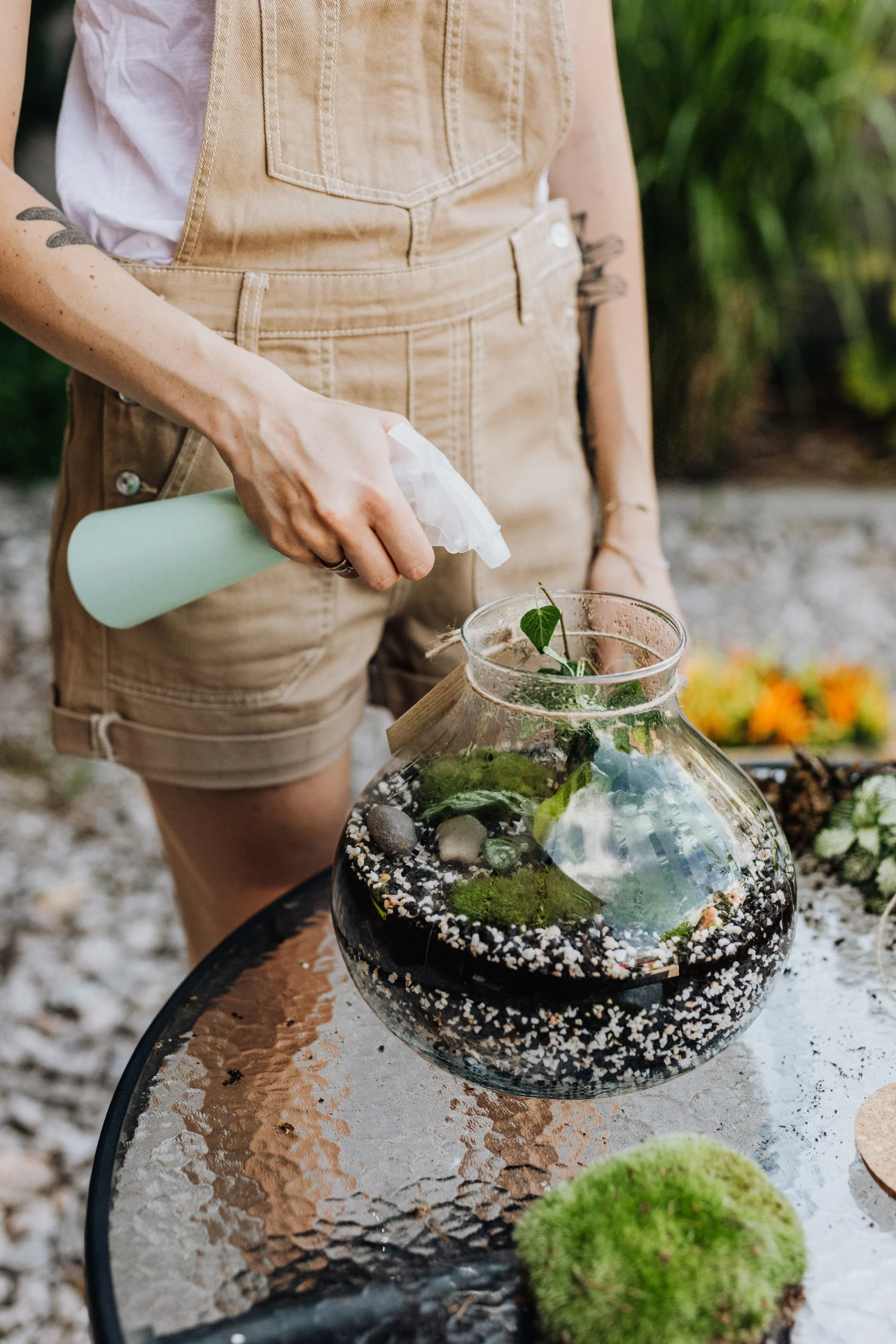
The easiest way to overwater a closed terrarium is to put it on a watering schedule.
A closed terrarium continually recycles much of the water already inside it. Moisture leaves the substrate and plant leaves as vapor, condenses on cooler glass and eventually returns to the growing medium.
Once that cycle settles into balance, very little water may need to come from you. That can mean months between waterings, and two terrariums in the same room can still need water at very different times.
Why a closed terrarium can go so long without watering
The lid slows water loss. Evaporation, plant transpiration, condensation and droplets returning to the substrate create a small internal water cycle.
That cycle is why ordinary houseplant advice such as watering every week does not translate cleanly to a sealed jar.
There is no reliable fixed watering schedule
Container size, seal tightness, substrate, plant mass, room temperature and light all affect water use and loss. A loosely covered vessel may need attention sooner than a tightly sealed one.
The calendar is therefore a weak watering signal. Read the terrarium itself.
The Three-Signal Watering Check
Signal 1: the glass stays dry
Little or no condensation through several ordinary day-and-night temperature cycles can be one clue that the system is becoming drier.
One clear morning is not enough. Condensation also changes with glass temperature, room temperature and sunlight conditions.
Signal 2: the substrate looks genuinely drier
Look through the glass at the growing medium. A genuinely drying substrate may appear lighter, less moist against the container or begin pulling slightly from the edge.
If the substrate remains dark, moist and visibly saturated, a clear pane of glass is not a reason to add more water.
Signal 3: the plants agree
Moisture-loving plants or live moss may begin showing plausible dryness symptoms when the system genuinely needs water.
Do not interpret every wilted or yellow leaf as drought. Plants can also wilt when roots are unhealthy in excessively wet conditions.
Condensation is not an on/off watering switch
Some condensation is normal in a closed terrarium. Its presence shows moisture is cycling, but the amount should be interpreted alongside substrate and plant condition.
Likewise, the absence of condensation does not automatically mean the terrarium needs water.
Too wet vs. balanced vs. too dry
| State | Typical clues | Response |
|---|---|---|
| Too wet | Saturated substrate, substantial standing water, persistent heavy droplets, soft declining tissue | Stop watering and diagnose excess moisture |
| Balanced | Moist substrate, healthy plants, light or changing condensation | Leave it alone |
| Too dry | Drying substrate, prolonged dry glass plus credible plant or moss dryness | Consider a small controlled watering |
How much water should you add?
There is no universal volume because jar size, existing moisture, substrate and planting density differ.
Add a small controlled amount and give it time to distribute. It is much easier to add a little more later than remove a large excess from a sealed container.
How to add water without flooding the terrarium
A narrow squeeze bottle, pipette or fine mister can make small corrections easier. The tool is secondary to the amount.
Aim water toward the growing medium rather than repeatedly soaking foliage and glass simply because misting looks gentle.
What if water is standing in the bottom?
A tiny amount of moisture visible in a lower reservoir is not automatically a crisis. A large standing reservoir combined with saturated substrate is a warning to stop adding water.
New terrariums need closer observation
The first days and weeks are a calibration period. Root balls, moss, substrate and hardscape may all bring moisture into the container before you add anything.
Observe how condensation and substrate moisture settle before assuming the jar needs another watering.
What if you already added too much water?
Stop watering. If excess moisture is clear, temporary ventilation can allow some water to escape. Severe standing water may need to be removed directly with a pipette, syringe, sponge or similar controlled method.
Do not put a wet terrarium into direct sun to dry it. Glass can heat rapidly and create an additional problem.
Watch the system, not the calendar
If the substrate is still moist and the plants are healthy, a clear pane of glass is not an emergency. If the glass has stayed dry, the substrate is genuinely drying and the plants are beginning to show credible dryness, add a little water and give the enclosure time to respond.
Closed terrariums reward restraint because most of their water is already inside. Your job is not to keep adding more. It is to notice when the balance has actually changed.
Frequently asked questions
- How often should you water a closed terrarium?
- Many established closed terrariums need supplemental water only a few times a year. Some may go longer, while less tightly sealed systems may need water more often. Do not use a fixed schedule.
- How do I know when my closed terrarium needs water?
- Look for several signs together: little or no condensation over an extended period, substrate that is clearly drying, and moisture-loving plants or moss beginning to show credible dryness.
- How much water should I put in a closed terrarium?
- There is no universal amount. Add a small controlled quantity, wait for it to redistribute and reassess before adding more.
- Should a closed terrarium have condensation?
- Some condensation is normal, but it does not need to cover the glass constantly. Interpret it alongside substrate moisture and plant condition.
- Can you overwater a closed terrarium?
- Yes. A closed terrarium has no external drainage, so excess water can remain in the system and keep the root zone saturated.
- Should I mist my closed terrarium every day?
- No. A balanced closed terrarium normally recycles its own moisture, and daily misting can add much more water than the system loses.
- Is it better to underwater or overwater a terrarium?
- Neither is ideal, but a small moisture deficit is easier to correct than a large excess in a container without external drainage. Add water gradually.
- Should I leave water in the bottom of my terrarium?
- Do not deliberately maintain a large standing reservoir. Water high enough to keep the root zone saturated is a warning to stop watering and reassess.
- Do closed terrariums ever need no additional water?
- Some tightly sealed balanced terrariums can operate for very long periods with little or no supplemental water. Observation is more useful than trying to force a maintenance-free schedule.
Related guides
Care & Troubleshooting
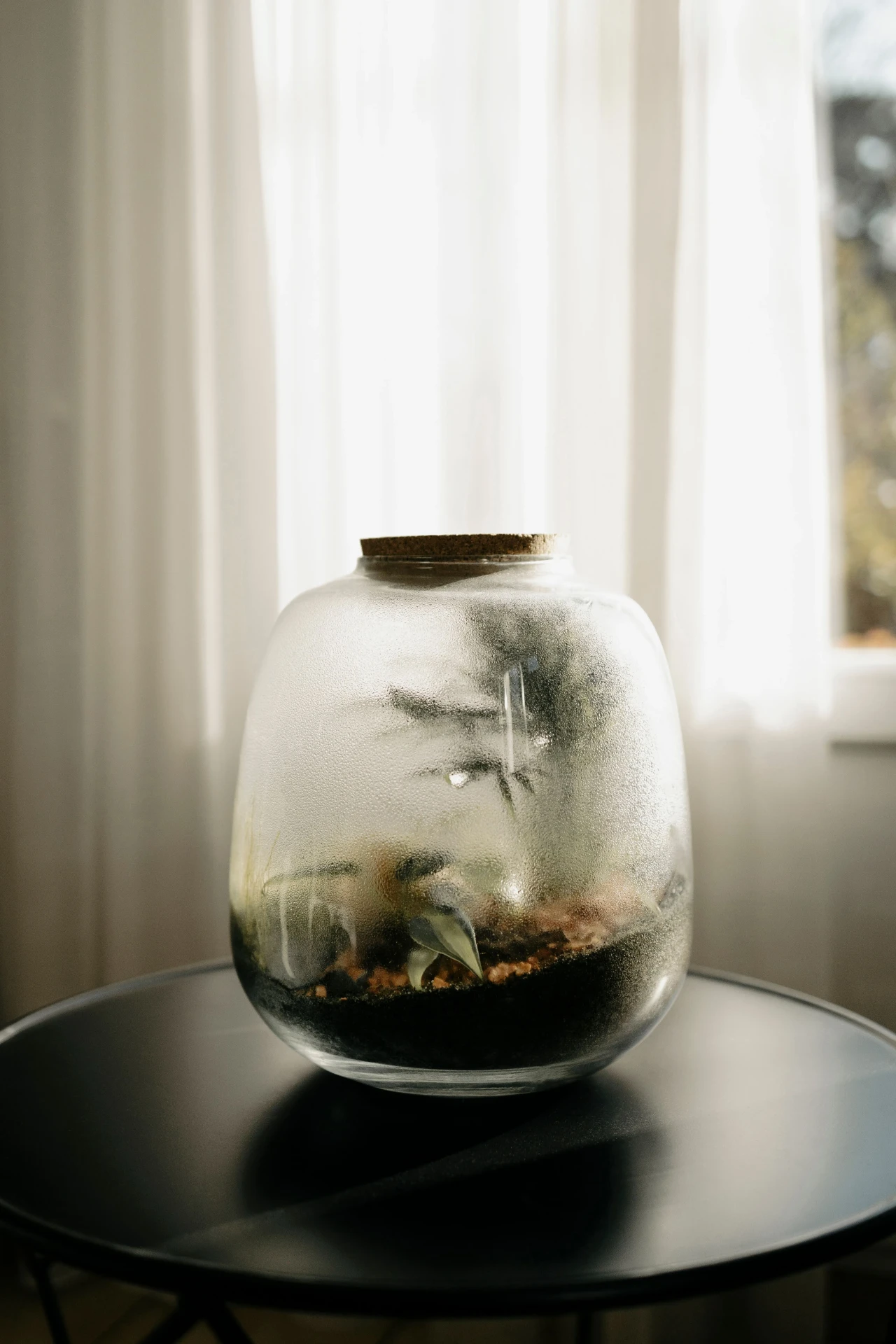
Too Much Condensation in a Terrarium? What to Do
Foggy glass is part of a closed terrarium's water cycle, but constant heavy droplets can signal excess moisture. Learn how to tell normal condensation from a problem and correct it without overreacting.
10 min readpublished
Care & Troubleshooting
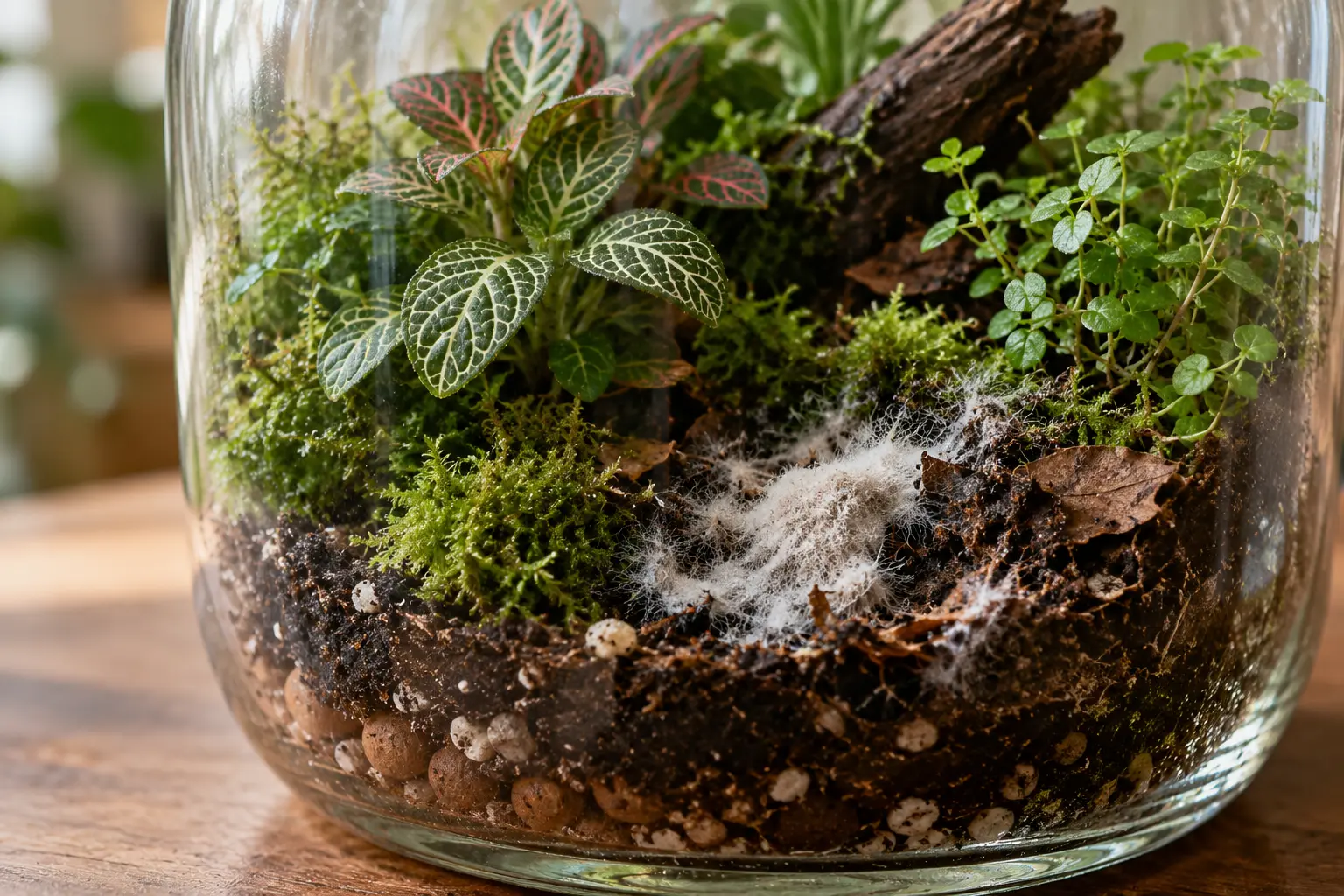
Mold in a Terrarium: Normal or a Problem?
Found fuzzy growth inside the glass? Learn when terrarium mold is simply decomposing organic material, when it signals excess moisture, and what to do next.
11 min readpublished
Care & Troubleshooting
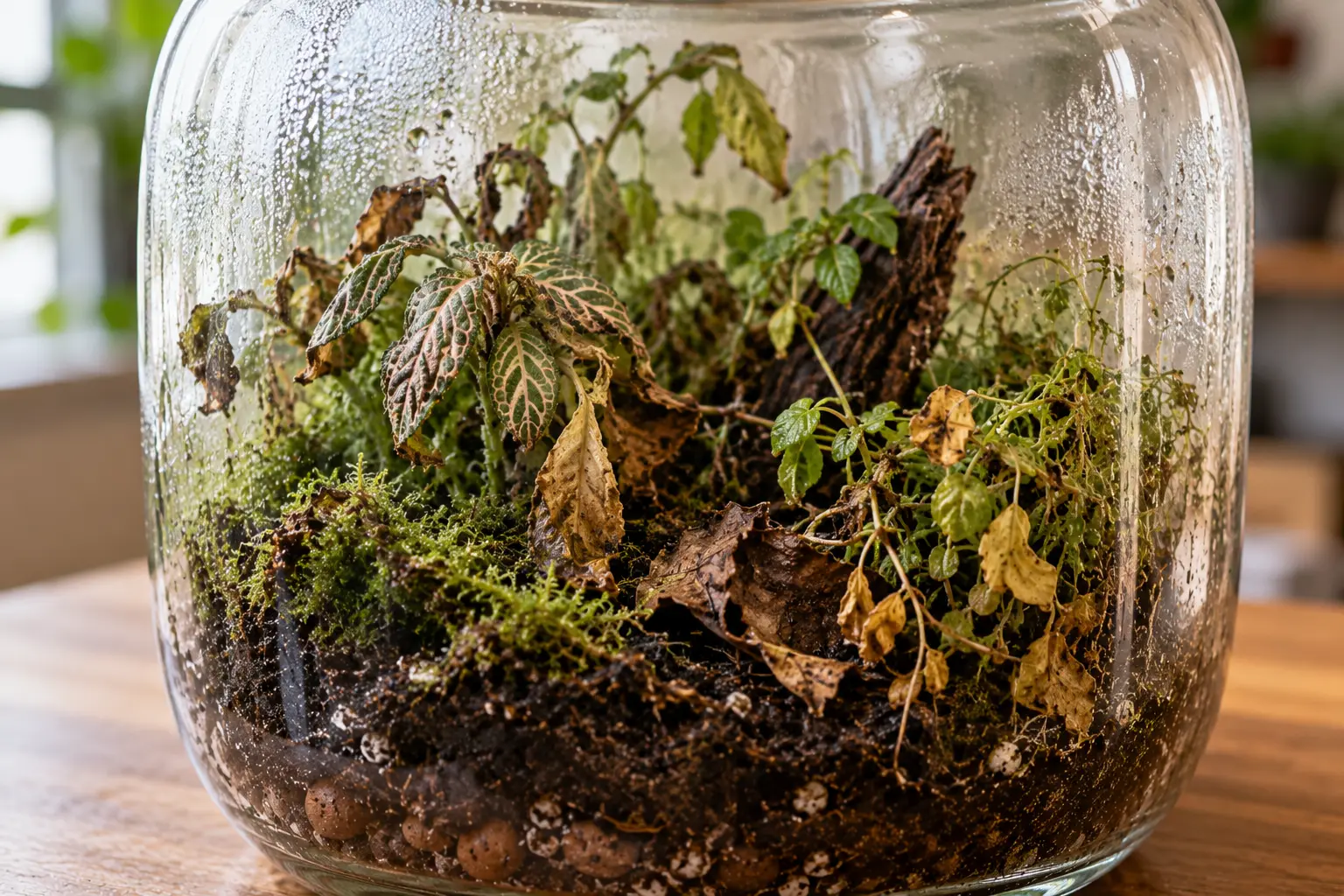
Why Is My Terrarium Dying? Complete Troubleshooting Guide
Several problems at once? Diagnose your terrarium as a system by checking roots, moisture, light, decay and plant compatibility before deciding whether to rescue or rebuild it.
14 min readpublished
Build Your First Terrarium With Confidence
Get the free Closed Terrarium Quick-Start Checklist.
Newsletter coming soon